Guide summary
Equestrian Clothing Sourcing
Research-led sourcing guidance for equestrian buyers, retailers, brands and manufacturers — connected directly to relevant EquiGuild supplier discovery.
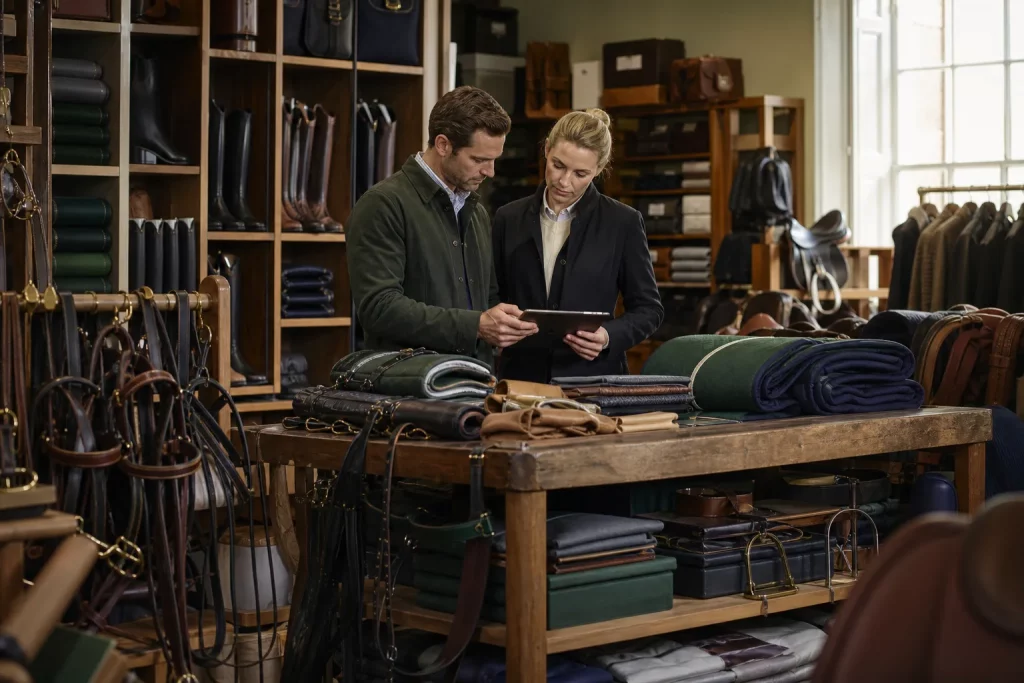
Equestrian clothing sourcing is the process of finding, comparing and procuring riding wear from suitable suppliers, manufacturers, brands and wholesale partners. This guide helps equestrian retailers, buyers and product teams turn a clothing requirement into a practical sourcing brief, identify the right type of commercial partner, and ask better questions before committing to samples, production or stock.
Use EquiGuild to explore supplier and brand profiles by sourcing requirement, then carry out your own commercial, technical and compliance checks before placing an order. The right route will depend on whether you need ready-to-sell products, private label clothing, custom development, or manufacturing support.
Last reviewed: September 2026
Start with the type of equestrian clothing you need
A clear product definition makes supplier discovery considerably more productive. “Riding clothing” can cover very different products, performance expectations and production methods, including:
- Riding breeches, tights and competition trousers
- Base layers, polo shirts, shirts and technical tops
- Fleeces, gilets, jackets and waterproof outerwear
- Competition jackets, show shirts and formal riding apparel
- Children’s riding wear and junior ranges
- Everyday lifestyle clothing with equestrian styling
- Teamwear, clubwear and branded event clothing
- Private label or own-brand collections
Before contacting potential partners, record the intended customer, retail price position, sales channel, target market, size range, expected annual volume and required launch date. Also note whether you need a catalogue product, a modified existing style, or a completely new design. These decisions affect the type of partner you should approach and the questions you need to ask.
What buyers should look for in an equestrian clothing partner
Product relevance and riding function
Equestrian clothing needs to work in the conditions in which it will be worn. Buyers should consider movement in the saddle, repeated bending, friction from tack and equipment, weather exposure, washing frequency and the need for comfortable layering. A garment that looks suitable in a lifestyle setting may not meet the practical requirements of riding.
Ask whether a product is intended for training, competition, yard work, leisure or more than one use. For technical garments, request information about fabric composition, stretch and recovery, construction, seam treatment, closures and care requirements. The Equestrian Research Atlas research on technical fabrics in riding clothing provides useful background on fibres, stretch, recovery, moisture management, waterproofing, durability and garment performance.
Quality that can be assessed
Do not rely only on general descriptions such as “premium”, “technical” or “durable”. Ask how quality is assessed and what evidence is available. Depending on the product, this may include fabric specifications, sample inspection, wash testing, colourfastness checks, dimensional stability, seam performance or wear testing.
For outerwear and other weather-resistant products, clarify whether water resistance comes from the fabric, a coating, a membrane, a treatment or a combination of construction methods. Research into technical textiles used in horse equipment can help buyers understand the relevance of textile construction, coatings, laminates and testing when discussing performance products.
Fit, grading and size coverage
Fit is commercially important in riding wear because body position, movement and layering can make a standard fashion block unsuitable. Ask how patterns are developed, whether fit samples are available, and how sizes are graded. For breeches and tights, discuss waistband construction, rise, grip placement, pocket design and comfort during prolonged riding. For jackets and layers, consider sleeve mobility, hem length and room for base layers.
Request a measurement chart and define the intended fit—close, regular, relaxed or competition-specific—before approving samples. If selling across markets, confirm how measurements are converted and labelled for each destination.
Materials, labelling and product information
Material information should be accurate and consistent across samples, product pages, labels and packaging. UK businesses should review the official GOV.UK guidance on textile labelling when checking fibre-content labelling responsibilities for textile products.
Be precise when discussing recycled fibres, organic materials, biodegradability, durability or reduced environmental impact. A claim should be supported by appropriate evidence and should not create a misleading impression about the whole garment. The CMA and GOV.UK guidance on environmental claims in fashion retail is a useful reference when reviewing sustainability language for product descriptions, marketing and packaging.
Supplier, manufacturer, brand or wholesaler?
Commercial labels are not always used consistently, so confirm what a prospective partner actually does before assuming it can meet your requirement.
Manufacturers
A manufacturer may produce garments to an existing specification or support development of new products. This can be appropriate for own-brand collections, custom patterns, exclusive colourways or repeat production. However, the amount of development support varies. Some manufacturers expect a complete technical pack, while others can assist with fabrics, samples and pattern adjustments.
Explore the dedicated Equestrian Clothing Manufacturers topic when your requirement involves production or product development. Ask whether the organisation is the factory, an agent, a sourcing office or a production intermediary, and which stages it manages directly.
Suppliers and wholesalers
A supplier or wholesaler may offer ready-made products for resale. This route can reduce development time and allow a retailer to test demand across established styles, but product exclusivity, colour selection, size availability and reorder terms may be limited. It is particularly relevant when you need stock for a shop, online store or seasonal range rather than a new manufactured collection.
Use Equestrian Clothing Suppliers and Equestrian Clothing Wholesalers to compare the type of sourcing route you need. Confirm whether the quoted product is available from stock, made to order, imported for you, or supplied on another basis.
Brands
An established equestrian brand may be the right partner if you want recognised products rather than an own-label range. Buyers should check wholesale access, territory arrangements, seasonal ordering windows, stock availability, recommended retail pricing policies and whether the brand permits the intended sales channels.
For broader brand discovery, see Equestrian Clothing, Riding Wear & Brands. If the focus is specifically on brand-led sourcing, EquiGuild also provides an Equestrian Brands resource.
Questions to ask during clothing sourcing
A structured first enquiry helps suppliers determine whether the opportunity is suitable and gives you comparable information. Include the following where relevant:
- Which product categories, styles or end uses do you support?
- Do you supply ready-made products, develop private label garments, manufacture to specification, or provide more than one route?
- Which markets and sales channels do you normally supply?
- What information is needed to quote accurately?
- What are the minimum order quantities by style, colour and size?
- Can minimums be combined across colours or styles?
- Are samples available, and what are the sample charges and approval stages?
- Can you work from a technical pack, reference garment, sketch or initial product brief?
- Which fabrics, trims, labels, packaging and decoration options are available?
- What are the expected development, production and repeat-order lead times?
- How are changes, defects, late delivery and quality issues handled?
- What documentation accompanies the goods, including fibre composition and care information?
MOQ, product development and lead-time considerations
Minimum order quantities
Minimum order quantity, or MOQ, can apply at several levels: per style, colour, size, fabric or total order. A low total quantity may still be difficult if a factory requires a minimum fabric purchase or a particular trim volume. Ask for a written explanation of how the minimum is calculated.
If you are testing a new range, compare a smaller initial order with the cost and availability of repeat production. A supplier with a higher first-order requirement may still be commercially suitable if reorders are reliable, while a seemingly flexible option may not work if lead times or replenishment terms are unsuitable.
Development and sampling
Product development commonly involves a design brief, fabric selection, first sample, fit review, revisions, pre-production approval and final production. Each stage should have a named decision-maker and an agreed sign-off method. Keep written records of measurements, tolerances, artwork, colour references and approved materials.
For performance garments, test the details that matter to the intended use rather than approving appearance alone. Consider mobility, comfort, transparency when stretched, pocket security, grip adhesion, wash behaviour and the interaction between the garment and riding equipment.
Lead times and seasonal planning
Lead time may begin at enquiry, sample approval, purchase-order confirmation, fabric booking or receipt of a deposit. Ask the supplier to separate development time, material procurement, production, inspection, shipping and customs clearance where applicable.
Plan backwards from the date the goods must be available for sale. Allow time for sample corrections, size-set approval, labelling, packaging, transport delays and potential quality checks. Seasonal launches and competition collections should be discussed early, particularly where fabrics or trims are not continuously available.
Building a practical equestrian clothing sourcing brief
A useful brief does not need to be long, but it should be specific enough to produce comparable responses. Include:
- Business context: your business type, target customer and intended sales channels.
- Product scope: categories, styles, intended use and whether the range is branded, wholesale or private label.
- Technical requirements: fabric properties, stretch, weather protection, breathability, grip, pockets, trims and construction details.
- Fit and sizing: target measurements, size range, fit preference and markets served.
- Commercial requirements: estimated quantities, target launch date, reorder expectations and budget framework.
- Brand requirements: logos, labels, packaging, colour standards and any exclusivity expectations.
- Compliance information: labelling, product documentation and evidence needed for any performance or environmental claims.
Send the same core brief to each potential partner, then record responses in a comparison table. Separate confirmed information from assumptions and identify which points still need verification. This makes it easier to compare a manufacturer with a wholesaler or a branded supplier without judging both against the wrong criteria.
Relevant suppliers and brands on EquiGuild
The following live EquiGuild profiles may be useful starting points for supplier discovery. Review each profile for the information provided, then contact the organisation directly to confirm current products, availability, commercial terms, production arrangements and suitability for your brief.
These profiles are discovery resources, not a substitute for due diligence. Before proceeding, request relevant samples or product information, confirm the contracting entity, check payment and delivery terms, and establish how quality concerns or specification changes will be managed.
How EquiGuild supports supplier discovery
EquiGuild is an equestrian trade network designed to help buyers find relevant suppliers, manufacturers and brands by capability and sourcing requirement. Rather than treating every clothing contact as interchangeable, use the network to identify potential routes—such as wholesale purchasing, brand distribution, private label development or manufacturing—and then narrow the shortlist using your own criteria.
When reviewing a profile or making an enquiry, focus on the questions that matter to your project: product relevance, development route, quantity expectations, location and logistics, documentation, communication and capacity for repeat orders. The purpose of discovery is to create a qualified shortlist for direct discussion, sampling and commercial assessment.
If your requirement is an own-brand collection, the Private Label Equestrian Clothing resource can help frame that sourcing route. For businesses specifically looking for UK-based brand discovery, see Equestrian Clothing Brands UK, while remembering to confirm each organisation’s current location, supply model and terms directly.
FAQs about equestrian clothing sourcing
Should I source from a manufacturer or a wholesaler?
Choose a manufacturer when you need custom development, own-brand products or production to a detailed specification. Choose a wholesaler when ready-made products, faster range assembly or established brands are more important. Some businesses use both routes.
What should I include in my first supplier enquiry?
Include your product categories, intended use, target customer, approximate quantities, size range, delivery date, branding needs and sales market. State whether you need ready-made stock, modified products, private label or full manufacturing.
How early should I start sourcing a new riding-wear collection?
Start early enough to allow supplier discovery, quotations, fabric or trim selection, samples, fit corrections, approval, production and delivery. The required time varies, so ask each prospective partner to separate development, production and shipping lead times.
What does MOQ mean for an equestrian clothing buyer?
MOQ means minimum order quantity. It may apply to a style, colour, size, fabric or complete order. Always ask how the minimum is calculated and whether quantities can be combined across products or colourways.
How can I check technical or environmental product claims?
Ask for the underlying fabric, construction or testing information and make sure the claim matches the finished product. For environmental wording, review the CMA and GOV.UK guidance and avoid broad claims that cannot be substantiated. For fibre content and textile labelling, consult the relevant GOV.UK requirements.
Ready to find the right clothing supplier or brand?
Move from research to live supplier discovery. Compare relevant businesses, explore existing clothing and brand categories, or turn a product idea into a sourcing brief.
Research behind this guide
This guide is supported by EquiGuild editorial research, the Equestrian Research Atlas and current UK guidance. Supplier listings remain separate commercial profiles and should be checked directly before trading.
- Equestrian Research Atlas — Technical Fabrics in Riding Clothing
Research on fibres, stretch, recovery, moisture management, waterproofing, durability and garment performance in riding clothing. - Equestrian Research Atlas — Technical Textiles Used in Horse Equipment
Research on textile construction, coatings, laminates, testing and product performance. - GOV.UK — Textile labelling
Official UK guidance on fibre-content labelling responsibilities for textile manufacturers and retailers. - CMA / GOV.UK — Fashion retail: consumer law when making green claims
Official guidance relevant to environmental and fabric-related claims in fashion retail. - EquiGuild — Equestrian Brands
Existing EquiGuild brand discovery and trade sourcing guide. - EquiGuild — Riding Wear Manufacturers
Existing EquiGuild manufacturer discovery page for riding wear. - EquiGuild — Equestrian Clothing Wholesalers
Existing EquiGuild wholesale clothing sourcing page.
Cite this guide
EquiGuild editorial reference · Last updated 24 September 2026
Canonical source: https://equiguild.co.uk/equestrian-suppliers/rider-clothing-footwear/equestrian-clothing-sourcing/