
Guide summary
Riding Shirts Manufacturers
Research-led sourcing guidance for equestrian buyers, retailers, brands and manufacturers — connected directly to relevant EquiGuild supplier discovery.
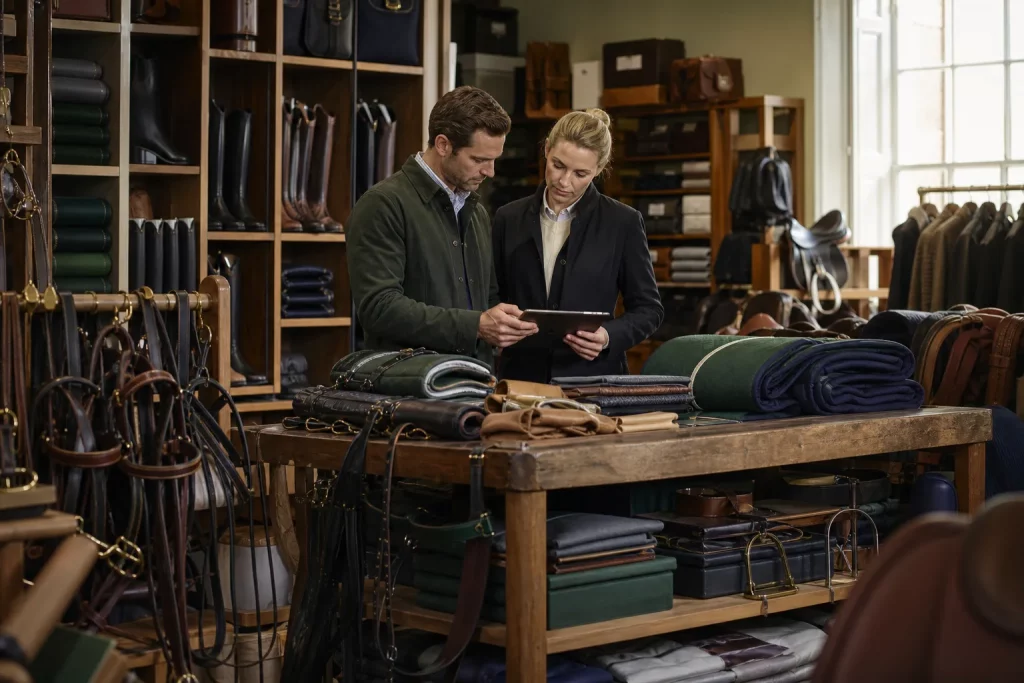
Riding Shirts Manufacturers
Use this page to identify riding shirt manufacturers, private label suppliers and equestrian clothing partners for retail, brand or distribution programmes. It explains what to compare when sourcing technical riding tops, which production questions to ask, and how EquiGuild can help you discover relevant supplier profiles without treating every listed business as the same type of partner.
Riding shirts may include competition shirts, base layers, training tops, polo shirts, technical long-sleeve shirts and everyday equestrian tops. The right supplier depends on the product’s intended use, fabric requirements, decoration, sizing, development process, order volumes and delivery expectations.
For a wider overview of the market, see EquiGuild’s guide to equestrian clothing, riding wear and brands. If your project includes complete riding outfits rather than shirts alone, the related guide to equestrian clothing manufacturers may also be useful.
Last reviewed: September 2026
What riding shirt manufacturers produce
“Riding shirt manufacturer” can describe several different production arrangements. Some businesses make finished garments from a buyer’s specifications. Others offer private label production, where a retailer or brand selects from existing styles and applies its own branding. Some suppliers may support design development, fabric selection, sampling and production, while others may mainly provide finished products for wholesale purchase.
Product categories to discuss with a potential partner can include:
- Competition shirts with formal collars, stand collars, concealed fastenings or bib-style detailing.
- Technical base layers designed for layering beneath a jacket or gilet.
- Training tops for schooling, warm-up and everyday yard use.
- Short-sleeve and long-sleeve polo shirts for riding, coaching, teams or retail collections.
- Quarter-zip, half-zip or funnel-neck tops with more casual or outdoor styling.
- Branded club, event and team shirts made around a supplied identity or logo system.
These categories can overlap, but the construction and performance brief may be quite different. A competition shirt might prioritise a neat appearance under a show jacket, whereas a training top may require greater freedom of movement, moisture management and resistance to repeated washing.
What buyers should look for
Fabric performance and hand feel
Ask the supplier to describe the proposed fabric composition, weight, stretch direction, recovery, opacity, breathability and care requirements. A shirt that feels suitable on a sample table may perform differently when worn in the saddle, layered under outerwear or washed repeatedly.
Technical fabric selection can involve fibres, stretch systems, moisture management, coatings, durability and garment construction. The Equestrian Research Atlas research on technical fabrics in riding clothing provides useful background for buyers assessing these factors rather than relying on broad terms such as “performance” or “technical”.
Where a fabric is promoted as sweat-wicking, quick-drying, UV-protective, antibacterial, waterproof or environmentally preferable, ask what the claim means in practical terms and whether supporting information or testing is available. A supplier should be able to distinguish a fibre property, a fabric treatment and a finished-garment performance claim.
Fit for riding and movement
Riding shirts should be assessed in relation to the rider’s position, not only on a static mannequin. Consider shoulder mobility, sleeve length, underarm comfort, hem coverage, collar height, zip placement and the way the shirt sits beneath a competition jacket or body protector.
Request a size chart and clarify how measurements were taken. If the garment is intended for multiple markets, confirm whether the fit is regular, close, relaxed, unisex or graded separately for different body shapes. A sample fitting should test movement, layering and riding posture before bulk production is approved.
Construction and finishing
Important details may include seam placement, stitch density, seam comfort, bartacks, zip quality, collar construction, cuff finish and reinforcement around high-use areas. Decorative piping, contrast panels, silicone details, embroidery and heat transfers can affect both appearance and production complexity.
For a technical shirt, ask whether the proposed construction has been tested after laundering and normal use. Research into technical textiles used in horse equipment discusses the relevance of textile construction, coatings, laminates and testing to product performance; those principles can help buyers formulate more precise questions for clothing suppliers as well. See the Equestrian Research Atlas technical textiles research.
Brand presentation and compliance information
Private label buyers should clarify where branding can be applied and what the supplier can provide for labels, packaging, swing tags, care instructions and barcode requirements. Confirm whether the factory can use buyer-supplied artwork, whether artwork must meet a particular file specification, and whether branding is included in the quoted production scope.
Fibre-content information is a separate issue from marketing language. UK businesses involved in selling textile products should review the official GOV.UK guidance on textile labelling for responsibilities relating to fibre composition and textile labels. Buyers should agree who is responsible for checking label information before products are placed on the market.
Manufacturer, private label supplier or wholesaler?
These terms are sometimes used interchangeably, but they can describe different sourcing routes.
Direct manufacturer
A direct manufacturer generally produces garments through its own facility or production network. This route may be relevant when a buyer needs custom patterns, specific fabrics, detailed construction or a repeatable production programme. However, “manufacturer” does not automatically mean that every service is available. Confirm whether the business handles sampling, grading, sourcing, decoration, packaging and export documentation, or whether some activities are outsourced.
Private label supplier
A private label supplier may offer existing garment shapes that can be adapted with a buyer’s branding, colours, labels or packaging. This can be suitable for a retailer or emerging brand that wants a branded range without developing every pattern from the beginning. Ask how much customisation is possible and whether the same style is available exclusively, semi-exclusively or to multiple customers.
Wholesale supplier or brand partner
A wholesaler or established equestrian brand may supply finished riding shirts for resale rather than manufacture to a buyer’s own specification. This can simplify product selection and shorten development work, but the buyer may have less control over fabric, fit, branding and exclusivity. EquiGuild’s guide to equestrian clothing suppliers can help distinguish broader supplier discovery from a narrowly defined manufacturing brief.
Before sending a technical specification, ask the business to explain its role in the supply chain. This helps avoid assuming that a listed supplier owns a factory, provides private label production or accepts custom development when those details have not been confirmed.
Sourcing questions to ask riding shirt suppliers
A structured first enquiry makes supplier responses easier to compare. Include the intended market, product type, target customer, estimated range size and required launch window. Useful questions include:
- Do you produce riding shirts, base layers, competition shirts or related technical tops?
- Do you offer custom manufacturing, private label production, wholesale supply or a combination?
- Can you work from a technical pack, reference sample, design sketch or existing product?
- Which fabric compositions, weights and stretch constructions are available?
- Can you provide fabric swatches and a pre-production sample?
- What fit blocks, size ranges and grading options are available?
- Which branding methods can you support, such as embroidery, heat transfer, screen print, woven labels or custom packaging?
- What quality checks are performed during sampling and production?
- How are care labels, fibre-content labels and product documentation handled?
- Which parts of the production process are carried out in-house and which are subcontracted?
If a supplier makes performance or environmental claims, ask for the precise basis of the claim. The CMA and GOV.UK guidance on green claims in fashion retail is relevant when businesses describe products as recycled, sustainable, lower-impact or environmentally preferable. Claims should be clear, accurate and supportable rather than based only on a fabric name or promotional phrase.
MOQ, sampling, product development and lead times
Minimum order quantities
Minimum order quantities can vary by supplier, product type, colour, size breakdown, fabric and branding method. Do not assume that one MOQ applies to the whole project. A supplier may set separate thresholds for development samples, production by colour, custom-dyed fabric, printed panels or special trims.
Ask whether quantities are calculated by style, colour, size, logo treatment or total order. Also confirm whether a mixed-size order is permitted and how size ratios are handled. If you are testing a new range, ask whether a smaller pilot order or stock-supported option is available, without assuming that it will be.
Product development
Establish who owns the pattern, artwork, technical pack and approved sample. Confirm how many sample revisions are included, who pays for pattern changes, and what happens if the fabric selected during development becomes unavailable.
A useful approval process may include a design review, fabric review, fit sample, revised sample, decoration approval and pre-production confirmation. Record measurements, construction details and colour references so that future repeat orders can be compared against the approved standard.
Lead times and delivery planning
Ask for separate estimates for fabric sourcing, sampling, approval, production, decoration, inspection and delivery. Lead time may change if the order uses custom fabric, imported trims, special packaging or several colourways. Confirm the point at which the production clock starts and whether the quoted timing depends on prompt sample approval or deposit payment.
Buyers should also discuss shipping terms, delivery locations, carton information, documentation and the process for handling shortages or quality issues. For seasonal equestrian collections, build in time for fit corrections and approval rather than planning around the shortest possible production estimate.
Related riding apparel categories
Riding shirts are often sourced as part of a wider collection. If your range includes coordinated lower-body products, compare the construction requirements for riding breeches manufacturers and riding tights manufacturers. These categories may require different fabrics, fit blocks, grip systems and testing questions.
For outer layers, see the guide to riding jackets manufacturers. Buyers developing a complete private label range can also review the dedicated page on private label equestrian clothing to consider how shirts fit into a broader branding and product-development programme.
Relevant suppliers and brands on EquiGuild
EquiGuild is an equestrian trade network for discovering suppliers, manufacturers and brands by product category and sourcing requirement. The following live profile is relevant to review as part of a riding-shirt sourcing search:
- Radhika Print Tex — view the EquiGuild supplier profile and assess the information provided there against your own riding-shirt, private label or branded apparel brief.
A profile is a starting point for due diligence, not a substitute for a direct supplier conversation. Before proceeding, confirm the business’s current product scope, production role, sample process, order requirements, lead times, documentation and ability to meet your specification.
FAQs
What is the difference between a riding shirt manufacturer and a private label supplier?
A manufacturer may produce garments to a buyer’s technical specification, while a private label supplier may offer existing styles adapted with the buyer’s branding. Some businesses provide both services, so confirm the exact production arrangement rather than relying on the label alone.
What should I include in a riding shirt supplier enquiry?
Include the shirt type, intended use, target market, fabric preferences, size range, branding requirements, estimated quantities, delivery destination and target launch date. Mention whether you have a technical pack, reference sample or only an initial concept.
How can I assess whether a riding shirt fabric is genuinely technical?
Ask for the fibre composition, fabric weight, stretch and recovery information, care instructions and any relevant test or performance documentation. Clarify exactly what terms such as moisture-wicking, quick-drying or breathable mean for the finished product.
Do riding shirt manufacturers have the same MOQ?
No. MOQ can differ by style, colour, size range, fabric, decoration and packaging. Request a written breakdown showing whether the minimum applies per style, colour, order or production run.
Who is responsible for textile labels in a private label project?
The parties should agree this contractually, but buyers should review the applicable requirements themselves. UK businesses can consult the official GOV.UK textile labelling guidance and confirm who checks fibre-content and care information before sale.
Ready to find the right clothing supplier or brand?
Move from research to live supplier discovery. Compare relevant businesses, explore existing clothing and brand categories, or turn a product idea into a sourcing brief.
Research behind this guide
This guide is supported by EquiGuild editorial research, the Equestrian Research Atlas and current UK guidance. Supplier listings remain separate commercial profiles and should be checked directly before trading.
- Equestrian Research Atlas — Technical Fabrics in Riding Clothing
Research on fibres, stretch, recovery, moisture management, waterproofing, durability and garment performance in riding clothing. - Equestrian Research Atlas — Technical Textiles Used in Horse Equipment
Research on textile construction, coatings, laminates, testing and product performance. - GOV.UK — Textile labelling
Official UK guidance on fibre-content labelling responsibilities for textile manufacturers and retailers. - CMA / GOV.UK — Fashion retail: consumer law when making green claims
Official guidance relevant to environmental and fabric-related claims in fashion retail. - EquiGuild — Equestrian Brands
Existing EquiGuild brand discovery and trade sourcing guide. - EquiGuild — Riding Wear Manufacturers
Existing EquiGuild manufacturer discovery page for riding wear. - EquiGuild — Equestrian Clothing Wholesalers
Existing EquiGuild wholesale clothing sourcing page.
Cite this guide
EquiGuild editorial reference · Last updated 11 November 2026
Canonical source: https://equiguild.co.uk/equestrian-suppliers/rider-clothing-footwear/riding-shirts-manufacturers/