
Guide summary
Find suppliers for this equestrian trade category
Looking for a business offering these products or services? Browse connected categories to discover suppliers, or list your own equestrian business to make your capabilities easier to find. Individual supplier claims should be checked directly.
Competition Jackets Suppliers
Research-led sourcing guidance for equestrian buyers, retailers, brands and manufacturers — connected directly to relevant EquiGuild supplier discovery.
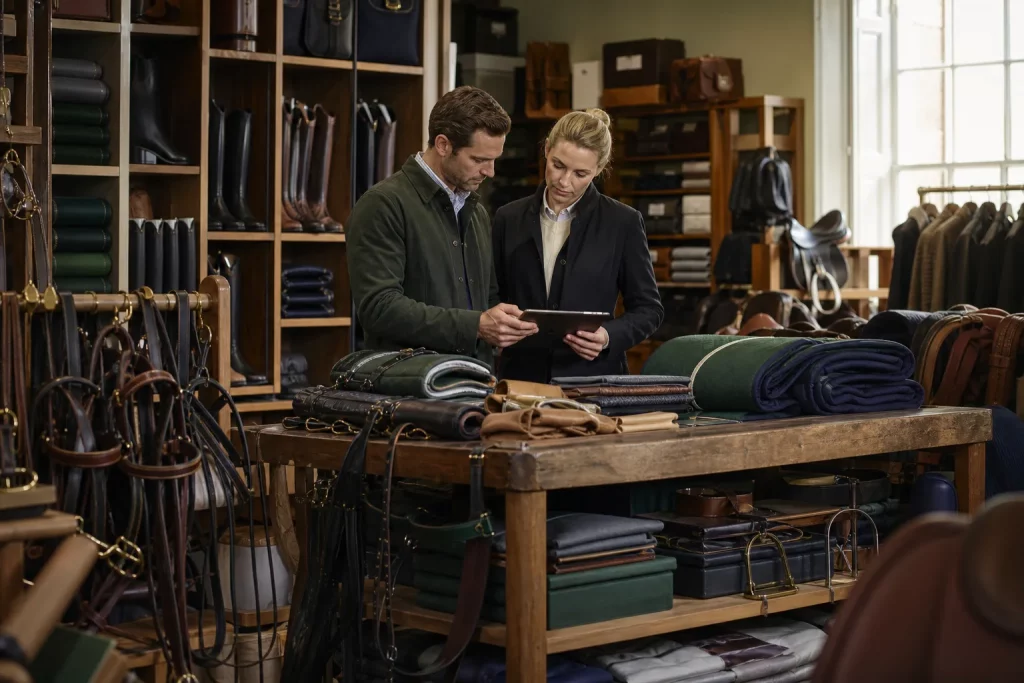
Find businesses for Competition Jackets Suppliers
Explore the directory to research businesses offering relevant products or services. If your company works in this area, create a supplier listing so trade buyers can discover your capabilities.
Competition Jackets Suppliers
Find and assess suppliers, manufacturers and brands for equestrian competition jackets, show coats and related riding wear. This guide is designed for equestrian retailers, buyers, distributors, brands and sourcing teams comparing ready-to-order collections with made-to-measure, private-label or fully developed jacket programmes.
A competition jacket must present a polished appearance while allowing a rider to move freely, manage changing temperatures and remain comfortable through warm-up, competition and travel. The right sourcing route depends on whether you need branded wholesale stock, a distributor relationship, a private-label range or a manufacturing partner able to develop a jacket from a technical specification.
Last reviewed: September 2026
What are competition jackets?
Competition jackets, also called show coats or riding show jackets, are tailored equestrian jackets intended for dressage, show jumping, eventing and other formal riding environments. They commonly combine a structured silhouette with riding-specific details such as articulated sleeves, a back vent, secure pockets, breathable construction and a fit that works in the saddle.
Different disciplines, markets and competition regulations can affect the appropriate styling. Some buyers may require a traditional dark coat for formal competition, while others may be sourcing contemporary colours, lightweight summer jackets, children’s styles, inclusive sizing or competition wear suitable for training and travel as well as the show ring.
When comparing competition jacket suppliers, treat appearance, technical performance, compliance, fit and commercial terms as equally important. A jacket that looks excellent on a product page may not meet your customers’ expectations if the fabric bags at the elbows, the lining restricts movement or the sizing is inconsistent between production runs.
What buyers should look for in a competition jacket supplier
Fabric performance and comfort
Ask how the proposed fabric performs in the conditions in which the jacket will be worn. Useful areas to investigate include stretch, recovery, breathability, moisture management, abrasion resistance, crease recovery and colourfastness. A rider may spend considerable time walking, mounting, warming up and waiting before entering the arena, so comfort cannot be judged by the jacket’s appearance alone.
The Equestrian Research Atlas research on technical fabrics in riding clothing provides useful background on fibres, stretch, recovery, moisture management, waterproofing, durability and garment performance. Use this type of information to frame supplier questions rather than accepting broad descriptions such as “technical”, “performance” or “breathable” without supporting details.
For lightweight or weather-resistant coats, ask whether protection comes from the fibre, a coating, a membrane, a laminate or the construction of the garment. The Equestrian Research Atlas guide to technical textiles discusses textile construction, coatings, laminates, testing and product performance across equestrian applications. It can help buyers understand which technical claims need closer examination.
Cut, fit and riding ergonomics
A competition jacket should maintain a neat profile without pulling across the shoulders or chest when the rider reaches forward. During sampling, assess:
- Shoulder width and sleeve mobility in a riding position.
- Jacket length when mounted and standing.
- Back vent placement and whether it lies correctly over the saddle.
- Collar height, fastening comfort and compatibility with show shirts or stock ties.
- Ease across the upper back, elbows and forearms.
- Pocket position, opening size and security when carrying small essentials.
- Size grading across adult, junior, tall, short and extended-size blocks.
Request a measurement chart and the supplier’s tolerance policy. If you are buying for resale, ask whether the same block and grading rules will be used for future repeats. Small fit changes can create avoidable returns and make a range look inconsistent on the shop floor.
Construction and finishing
Inspect seam quality, lining attachment, hems, button or zip security, pocket reinforcement and the finish around vents and cuffs. A tailored competition coat needs to retain its shape after repeated wear, cleaning and transport. Ask whether the supplier can provide care instructions that accurately reflect the fabric and construction.
It is also worth requesting information on testing or quality-control procedures where relevant. Do not assume that a supplier’s use of terms such as “durable”, “water resistant” or “easy care” represents a particular test standard. Ask what was tested, under which conditions and whether results apply to the finished jacket rather than only to a fabric swatch.
Appearance and branding
For a retail collection, assess colour consistency, lapel or collar proportions, buttons, embroidery placement, logo visibility and packaging. A supplier may offer subtle branding options, removable labels or a fully branded garment, but these should be confirmed rather than assumed.
Ask to see production samples in every proposed colour where colour accuracy is commercially important. Dark navy, black, charcoal and brown can vary noticeably under different lighting. If a collection includes seasonal or fashion colours, confirm whether those shades are repeatable for replenishment orders.
Supplier, brand, wholesaler or manufacturer?
The word “supplier” can describe several different sourcing routes. Clarifying the relationship early will help you compare like with like.
Equestrian brands
An established equestrian brand may offer finished competition jackets through wholesale accounts, distributors or regional sales channels. This route can provide an existing product range, established sizing and brand assets, but buyers should confirm territory arrangements, wholesale terms, stock availability and whether the brand permits marketplace or online resale.
Use the Equestrian Brands topic to explore brand discovery within the wider trade landscape. A brand relationship may be appropriate when speed to market, recognisable presentation and a ready-developed collection are more important than exclusive product development.
Wholesale suppliers and distributors
A wholesaler or distributor may consolidate products from one or more brands and supply retailers. This can simplify ordering, particularly when you need complementary riding wear, but ask who controls product specifications, stock information, warranty handling and replenishment. Confirm whether samples represent current production and whether the distributor can support repeat orders in the sizes and colours you need.
EquiGuild’s Equestrian Clothing Suppliers and Equestrian Clothing, Riding Wear & Brands pages can help frame a broader search across clothing suppliers and riding-wear businesses.
Manufacturers
A manufacturer may produce an existing jacket design, develop a specification supplied by your business or support a private-label collection. Manufacturing enquiries should establish the factory’s actual role: pattern development, fabric sourcing, cutting, sewing, finishing, packing and quality control may be handled by one company or divided across several partners.
If you need a custom or exclusive range, compare suppliers using more than a catalogue photograph. Ask for examples of similar garments, development capabilities, sample stages, production locations, communication arrangements and the process for approving a pre-production sample. The Equestrian Clothing Manufacturers topic is relevant when your requirement is centred on production rather than simply buying an existing brand.
Private-label partners
Private label can range from adding your own labels to an existing block through to developing a unique pattern, fabric combination and trim package. Before requesting quotations, decide which elements must be exclusive: fit, colour, fabric, lining, hardware, packaging or the complete design.
For an overview of this route, see Private Label Equestrian Clothing. Do not assume that a supplier offering private label will also offer low minimums, in-house design or ownership of patterns. Those points should be stated in the commercial agreement.
Key sourcing questions to ask
MOQ and order structure
Minimum order quantity can apply per style, colour, size, fabric or total order. Ask the supplier to explain the calculation rather than accepting a single headline figure. A seemingly manageable total may become difficult if each colour must be ordered in a separate size ratio.
Useful questions include:
- Is the MOQ based on units, cartons, styles or total order value?
- Can sizes be mixed within a colour or style?
- Are sample orders counted towards production quantities?
- What are the minimums for custom colours, labels, trims and packaging?
- Can repeat orders be placed in smaller quantities?
- Are there different terms for stocked goods and made-to-order products?
Product development and sampling
For a new competition jacket, request a clear development schedule. This should identify the technical pack or measurement information required, fabric and trim approval, first sample, fit comments, revised sample, pre-production approval and final inspection.
Ask who pays for patterns, samples, courier charges and modifications if the design changes. Confirm how sample comments will be recorded and whether the approved sample becomes the production reference. If the jacket includes stretch panels, bonded seams, waterproof finishes or specialised lining, make sure those details appear in the specification rather than remaining informal instructions.
Lead times and replenishment
Lead time may differ between an in-stock jacket, a repeat order and a new production run. It can also be affected by fabric availability, trim sourcing, factory capacity, testing, shipping and seasonal demand before major competition periods.
Ask for separate estimates for sampling, production and delivery. Confirm when the clock starts: deposit payment, purchase-order acceptance, fabric approval or another milestone. For a retail range, discuss continuity. A reliable replenishment plan may be more valuable than a short initial lead time if your best-selling sizes need to remain available throughout the season.
Labelling, claims and documentation
Textile labelling should be treated as part of the product specification. UK buyers and sellers should review the official GOV.UK guidance on textile labelling for responsibilities relating to fibre content and textile product information. Confirm what information the supplier will provide, how labels will be attached and whether the supplied documentation matches the finished garment.
Environmental or fabric-performance claims also require care. Terms such as “eco”, “sustainable”, “recycled”, “low impact” or “water-saving” should be specific, supportable and clear to the customer. The CMA and GOV.UK guidance on green claims in fashion retail is relevant when reviewing product descriptions, hangtags, websites and marketing materials.
Request the underlying information for any claim you intend to publish. If a supplier cannot explain the basis, scope or limitations of a claim, rewrite it or remove it rather than transferring an unsupported statement into your own catalogue.
Related riding-jacket categories
Competition jackets are often sourced alongside less formal or more weather-focused outerwear. If your buying brief includes training and leisure products, compare specifications across categories rather than treating every riding jacket as interchangeable.
- Equestrian Jackets Suppliers for a broader outerwear sourcing brief.
- Riding Jackets Manufacturers when you are looking for production support across riding jackets.
- Equestrian Gilets Suppliers for sleeveless layering products that may sit alongside show and training collections.
Finding relevant suppliers on EquiGuild
EquiGuild is an equestrian trade network that helps buyers discover relevant suppliers, manufacturers and brands by capability and sourcing requirement. For competition jackets, use the surrounding category pages to clarify whether you are looking for a finished brand range, a clothing supplier, a manufacturer, a wholesaler or a private-label partner.
When contacting any potential business, make your initial enquiry specific. Include the intended market, customer profile, jacket type, expected size range, target season, preferred materials, branding requirements, estimated order structure and whether you need stock or development. A concise brief makes it easier for a supplier to explain what it can offer and which points require further discussion.
EquiGuild discovery works best as the starting point for a structured sourcing process. Shortlist relevant businesses, request documentation and samples where appropriate, then compare fit, construction, communication, commercial terms and delivery assumptions before making a buying decision.
FAQs
What is the difference between a competition jacket and a general riding jacket?
A competition jacket is designed for a more formal show appearance and typically has a tailored silhouette, while a general riding jacket may prioritise weather protection, warmth, training comfort or casual use. The distinction depends on the product’s cut, fabric, styling and intended use.
Should I source competition jackets from a brand or a manufacturer?
Choose a brand or wholesaler when you need an existing collection and established presentation. Choose a manufacturer or private-label partner when you need custom branding, exclusive details, a specific fit or a product developed to your own specification.
What should I include in a competition jacket sourcing brief?
Include the intended discipline and market, jacket silhouette, fabric preferences, stretch and weather requirements, colour range, size range, branding, packaging, target launch date, expected order structure and whether you need stock, wholesale supply or product development.
How can I test whether a jacket is suitable for riding?
Evaluate a sample while seated in a riding position and while moving through typical riding actions. Check shoulder and sleeve mobility, back-vent behaviour, collar comfort, pocket security, fabric recovery and whether the jacket remains neat without restricting movement.
What should I ask about environmental claims?
Ask what the claim means, which part of the product it covers, what evidence supports it and whether the wording is suitable for customer-facing marketing. Review the CMA and GOV.UK guidance before publishing broad environmental statements.
Ready to find the right clothing supplier or brand?
Move from research to live supplier discovery. Compare relevant businesses, explore existing clothing and brand categories, or turn a product idea into a sourcing brief.
Research behind this guide
This guide is supported by EquiGuild editorial research, the Equestrian Research Atlas and current UK guidance. Supplier listings remain separate commercial profiles and should be checked directly before trading.
- Equestrian Research Atlas — Technical Fabrics in Riding Clothing
Research on fibres, stretch, recovery, moisture management, waterproofing, durability and garment performance in riding clothing. - Equestrian Research Atlas — Technical Textiles Used in Horse Equipment
Research on textile construction, coatings, laminates, testing and product performance. - GOV.UK — Textile labelling
Official UK guidance on fibre-content labelling responsibilities for textile manufacturers and retailers. - CMA / GOV.UK — Fashion retail: consumer law when making green claims
Official guidance relevant to environmental and fabric-related claims in fashion retail. - EquiGuild — Equestrian Brands
Existing EquiGuild brand discovery and trade sourcing guide. - EquiGuild — Riding Wear Manufacturers
Existing EquiGuild manufacturer discovery page for riding wear. - EquiGuild — Equestrian Clothing Wholesalers
Existing EquiGuild wholesale clothing sourcing page.
Cite this guide
EquiGuild editorial reference · Last updated 11 November 2026
Canonical source: https://equiguild.co.uk/equestrian-suppliers/rider-clothing-footwear/competition-jackets-suppliers/