Guide summary
Riding Wear Brands
Research-led sourcing guidance for equestrian buyers, retailers, brands and manufacturers — connected directly to relevant EquiGuild supplier discovery.
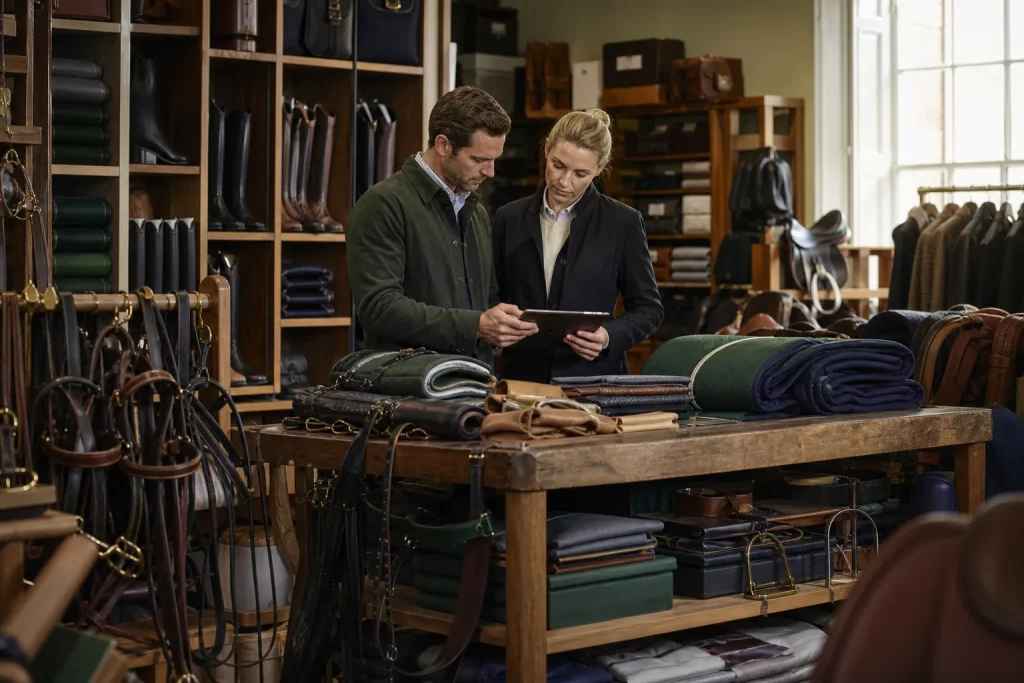
Riding wear brands serve a specialised market where clothing must support movement, comfort, weather protection, durability and a recognisable equestrian identity. This guide helps retailers, buyers, distributors, brands and sourcing professionals identify suitable riding wear partners, compare product requirements and decide whether they need an established brand, a wholesale supplier, a manufacturer or a private-label development route.
Use it alongside EquiGuild’s guide to equestrian clothing, riding wear and brands when building a supplier shortlist or reviewing opportunities across riding apparel.
Last reviewed: September 2026
What counts as riding wear?
Riding wear includes clothing designed for riding, training, competition, yard work and related equestrian activities. Depending on the brand and collection, this may include:
- Riding breeches, jodhpurs and competition breeches
- Riding tights and technical leggings
- Polo shirts, base layers and technical tops
- Show shirts, competition jackets and riding coats
- Gilets, waterproof jackets, softshells and winter coats
- Hoodies, sweatshirts and lifestyle equestrian apparel
- Riding gloves, socks, belts and other apparel accessories
- Children’s, youth, women’s and men’s riding clothing
The term “brand” can refer to an established consumer label, a specialist trade label, a retailer’s own collection or a new label being developed through a manufacturing partner. For a buyer, the important question is not simply whether a company produces riding wear, but whether its product range, development process and commercial model fit the intended channel.
What buyers should look for in riding wear brands
Product purpose and rider use
Start by defining how the garment will be used. A competition jacket has different requirements from a winter yard coat, while riding tights intended for everyday schooling may be assessed differently from premium breeches for intensive training.
Useful product questions include:
- Is the garment intended for competition, training, leisure, yard work or general outdoor use?
- What riding disciplines and climate conditions is it designed for?
- Does the design accommodate a riding position, repeated movement and contact with tack?
- Are key features such as phone pockets, full-seat grip, ankle panels, vents or adjustable cuffs appropriate for the target customer?
- Is the range focused on technical performance, classic styling, lifestyle wear or a combination?
Fabric and garment performance
Fabric selection affects comfort, fit, recovery, appearance and product life. Stretch, moisture management, breathability, wind resistance, waterproofing and abrasion resistance may all matter, but the relevance depends on the garment and intended use.
The Equestrian Research Atlas research on technical fabrics in riding clothing provides useful background on fibres, stretch, recovery, moisture management, waterproofing, durability and garment performance. Buyers can use these topics as a framework for asking suppliers how a fabric has been selected and what product testing supports any stated performance.
Do not treat a fabric description as proof of performance. Terms such as “water-resistant”, “breathable”, “quick-drying” or “four-way stretch” should be connected to a clear specification, test method or agreed product standard where the claim is commercially important.
Fit, grading and size architecture
Riding wear is sensitive to fit because garments must work in a seated position and often be worn for extended periods. Review the intended body shape, rise, waistband construction, sleeve length, knee placement and hem design. For breeches and tights, check whether the seat and leg panels remain comfortable when mounted.
Ask how the supplier manages size grading and whether the size chart is based on body measurements, garment measurements or an existing brand block. If selling across markets, confirm the approach to regional sizing and the availability of samples across the proposed size range. Extended sizing should be considered at the product-development stage rather than treated as an afterthought.
Construction and finish
Inspect seams, bartacks, zips, snaps, elastic, pocket construction, lining, logos and grip applications. Garments used around horses and tack may encounter repeated rubbing, dirt, washing and stretching. Construction should therefore be reviewed alongside the fabric rather than judged from fabric composition alone.
For technical textiles, the Equestrian Research Atlas research on technical textiles used in horse equipment offers relevant context on textile construction, coatings, laminates, testing and product performance. While riding apparel is not the same as horse equipment, these considerations can help buyers formulate more precise questions about layered fabrics, coatings and durability.
Brand identity and commercial fit
A riding wear brand should be assessed on more than its visual identity. Consider its intended price positioning, design language, target rider, seasonal range, packaging, imagery, merchandising support and wholesale terms. A retailer may need a complete collection, while a distributor may be looking for a focused category or a brand that complements an existing portfolio.
Ask whether the brand is available for the territory and channel under consideration. Also clarify whether products are sold through direct-to-consumer channels, other retailers, marketplaces or competing distributors. These arrangements can affect channel conflict and the commercial value of a partnership.
Brands, suppliers and manufacturers: what is the difference?
These terms are often used interchangeably, but they describe different roles in the supply chain.
Riding wear brands
A brand typically owns or manages the customer-facing proposition: product design, branding, marketing, collection planning and distribution. It may manufacture directly, work with one or more factories, or source finished products from specialist suppliers. An established brand may be suitable for wholesale buying when a retailer wants ready-to-sell products and an existing market identity.
Riding wear suppliers and wholesalers
A supplier may provide finished garments, components, sourcing support or access to a product range. A wholesaler generally sells products to trade customers, although the exact model varies. Buyers should establish whether the supplier owns the brand, represents another brand, holds stock, produces to order or connects buyers with a manufacturing partner.
For a broader sourcing list, see EquiGuild’s page on equestrian clothing suppliers and its guide to equestrian clothing manufacturers.
Manufacturers and private-label partners
A manufacturer makes garments to an agreed specification. Depending on its model, it may support pattern development, fabric sourcing, sampling, grading, production, packaging or quality control. Not every manufacturer offers every service, so the buyer should confirm the full scope before assuming that a factory can take a product from concept to finished stock.
Private-label sourcing is appropriate when a retailer, distributor or new brand wants products carrying its own identity. Product specifications, ownership of patterns and artwork, labelling, packaging, exclusivity and approval procedures should be agreed in writing. EquiGuild’s resources on private-label equestrian clothing and private-label riding wear can help frame this type of project.
Key sourcing questions for riding wear buyers
MOQ and order structure
Minimum order quantity can apply per style, colour, size, fabric or total order. Ask for the precise basis rather than recording only a single headline figure. A low minimum at total-order level may still be difficult if each colour and size requires a separate commitment.
Also clarify whether the first order differs from repeat orders, whether mixed sizes are allowed, how colour substitutions are handled and whether stock or made-to-order options are available. Do not assume that an advertised product range is immediately available for wholesale delivery.
Product development and sampling
For a new collection, establish the development stages before placing a production order. These may include a design brief, technical pack, fabric and trim approval, first sample, fit sample, size-set sample, pre-production sample and final inspection.
Ask who pays for samples, patterns, courier charges, testing and revisions. Confirm how many correction rounds are included and who approves the final measurements. For riding garments, fit testing should ideally involve movement relevant to the intended use, not only a static mannequin or standing fit.
Lead times and seasonal planning
Lead time can include fabric booking, sample approval, production, finishing, inspection, shipping and customs clearance. Request a timeline that separates these stages and identifies the point at which the schedule begins. Seasonal riding collections may need to be planned well ahead of retail launch dates, particularly when fabrics or trims are sourced specifically for the order.
Ask how delays, partial shipments, fabric substitutions and repeat orders are handled. A supplier’s ability to communicate changes may be as important as the original estimate.
Labelling, documentation and claims
Textile composition and care information should be reviewed before production and before goods enter the market. The GOV.UK guidance on textile labelling explains UK responsibilities relating to fibre-content labelling for textile manufacturers and retailers. Buyers should confirm who is responsible for labels, translations, care instructions, country-of-origin information where applicable and product documentation.
Environmental claims also require care. If a brand or supplier describes a garment as recycled, sustainable, low-impact, biodegradable or better for the environment, request evidence and ensure the claim is specific and not misleading. The CMA and GOV.UK guidance on environmental claims in fashion retail is a useful reference for reviewing this area.
Relevant suppliers and brands on EquiGuild
The following live EquiGuild profiles may be relevant starting points for buyers researching riding wear, apparel or related sourcing opportunities. The profile links are provided for discovery; buyers should contact each organisation directly to confirm its current products, services, locations, order terms, development support and suitability for a particular project.
- JSM Equestrian Supplies
- Khalique Sons International
- JOJI EXPORTS PVT LTD
- REALTEIN EXPORTS PVT LTD
- Starling Exports
- De Star Industry
- Zofiyang
- DH Sportz
When reviewing a profile, record the information that matters to your buying process: product category, business role, development support, target markets, order structure, communication route and any documentation needed for onboarding. Treat the first conversation as a qualification step, then request samples or formal specifications where appropriate.
How EquiGuild supports riding wear discovery
EquiGuild is an equestrian trade network designed to help buyers discover relevant suppliers, manufacturers and brands by capability and sourcing requirement. It can be used to create an initial longlist, compare different types of trade partner and move from a general product search towards a more specific enquiry.
The most effective approach is to search by the job that needs to be done. For example, a buyer may need a finished riding wear brand for wholesale, a manufacturer for a new breeches line, a private-label partner for a retailer collection or a supplier able to discuss technical outerwear. Once potential contacts are identified, use the questions above to check fit, documentation, development process and commercial terms.
For additional market context, EquiGuild also maintains resources covering equestrian brands, including brand discovery across the wider equestrian sector. A focused shortlist, a clear product brief and direct supplier confirmation will usually produce better results than relying on brand names alone.
FAQs about riding wear brands and sourcing
What is the difference between buying a riding wear brand and developing private label?
Buying a brand usually means purchasing an existing collection with established product identity and packaging. Private label means developing or selecting products to sell under your own brand, with greater responsibility for specifications, approvals, labelling and marketing.
What should I ask a riding wear manufacturer first?
Ask whether it produces the relevant garment category, supports sampling and grading, accepts the required order structure, can meet your target delivery window and provides the documentation needed for your market. Then confirm details with a written specification.
Are technical fabric claims enough to judge a riding garment?
No. Fabric claims should be considered alongside garment construction, fit, seam quality, closures, testing and intended use. Request evidence or agreed test criteria for performance claims that are important to the product or customer.
How early should I begin sourcing a seasonal riding wear collection?
Begin early enough to allow for supplier comparison, sampling, fit corrections, approvals, production, inspection and transport. The exact schedule depends on the product and supplier, so request a stage-by-stage timeline before committing to launch dates.
How can I compare riding wear suppliers fairly?
Use the same brief for each supplier and compare product fit, development support, order structure, lead time, documentation, communication and commercial terms. Avoid comparing headline prices without considering samples, revisions, packaging, freight and compliance responsibilities.
Ready to find the right clothing supplier or brand?
Move from research to live supplier discovery. Compare relevant businesses, explore existing clothing and brand categories, or turn a product idea into a sourcing brief.
Research behind this guide
This guide is supported by EquiGuild editorial research, the Equestrian Research Atlas and current UK guidance. Supplier listings remain separate commercial profiles and should be checked directly before trading.
- Equestrian Research Atlas — Technical Fabrics in Riding Clothing
Research on fibres, stretch, recovery, moisture management, waterproofing, durability and garment performance in riding clothing. - Equestrian Research Atlas — Technical Textiles Used in Horse Equipment
Research on textile construction, coatings, laminates, testing and product performance. - GOV.UK — Textile labelling
Official UK guidance on fibre-content labelling responsibilities for textile manufacturers and retailers. - CMA / GOV.UK — Fashion retail: consumer law when making green claims
Official guidance relevant to environmental and fabric-related claims in fashion retail. - EquiGuild — Equestrian Brands
Existing EquiGuild brand discovery and trade sourcing guide. - EquiGuild — Riding Wear Manufacturers
Existing EquiGuild manufacturer discovery page for riding wear. - EquiGuild — Equestrian Clothing Wholesalers
Existing EquiGuild wholesale clothing sourcing page.
Cite this guide
EquiGuild editorial reference · Last updated 24 September 2026
Canonical source: https://equiguild.co.uk/equestrian-suppliers/equestrian-retail-brands/riding-wear-brands/