
Guide summary
Equestrian Waterproof Clothing Suppliers
Research-led sourcing guidance for equestrian buyers, retailers, brands and manufacturers — connected directly to relevant EquiGuild supplier discovery.
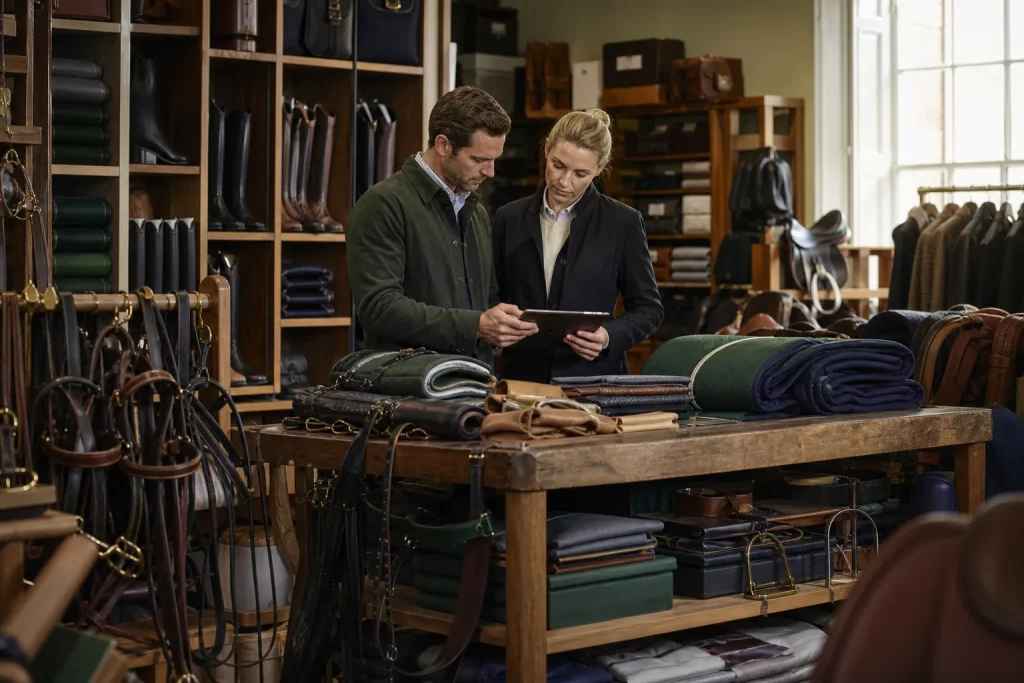
Equestrian Waterproof Clothing Suppliers
Use this page to structure your search for equestrian waterproof clothing suppliers, riding-wear manufacturers and brands that can support retail, wholesale, private-label or product-development requirements. It explains what to compare in waterproof rider wear, which questions to ask about construction and supply, and how to use EquiGuild to discover relevant businesses without treating every supplier as interchangeable.
Waterproof riding clothing has to work across several conditions at once: rain, wind, movement in the saddle, contact with tack, changing temperatures and the practical demands of yard or competition use. A suitable supplier therefore needs to be assessed on more than whether a garment is described as “waterproof”. Buyers should look at the intended use, fabric and garment construction, fit, testing evidence, development process, order requirements and the supplier’s ability to communicate clearly about performance.
Last reviewed: September 2026
What to look for when sourcing waterproof rider wear
The right specification depends on the product category and customer. A lightweight packable rain jacket for hacking has different priorities from a technical winter coat, waterproof overtrousers or a durable yard jacket. Before contacting suppliers, define the use case and separate essential requirements from desirable features.
Water resistance and waterproofing
Ask how the fabric and finished garment are intended to resist water. Waterproofing may involve the textile structure itself, a coating, a membrane, a laminate or a combination of treatments. Seams, zips, pockets, cuffs, hems and hood construction can all affect how well a garment performs in real use.
The Equestrian Research Atlas research on technical fabrics in riding clothing provides useful background for buyers comparing fibres, stretch, recovery, moisture management, waterproofing and durability. Its research on technical textiles used in horse equipment is also relevant when assessing textile construction, coatings, laminates, testing and overall product performance.
Rather than relying on a broad marketing term, ask the supplier to explain:
- Which fabric or textile construction is proposed for the product?
- Is the garment coated, laminated or treated, and what care instructions apply?
- Are seams taped, sealed or otherwise constructed to reduce water entry?
- How are water-resistant zips, storm flaps, cuffs and pocket openings handled?
- What performance information or test documentation is available for the material or finished garment?
Breathability and moisture management
A garment can keep rain out but still feel uncomfortable if heat and perspiration cannot escape effectively. This matters particularly for active riders, instructors, grooms and customers who move between riding, stable work and outdoor waiting periods.
Discuss the intended activity level, base-layer compatibility and seasonal use. A supplier should be able to explain the balance between weather protection, ventilation and comfort for the proposed design. Useful design questions may cover underarm vents, two-way zips, back pleats, stretch panels, mesh linings and the effect of lining choices on breathability.
Fit, movement and riding-specific details
Waterproof clothing for equestrian use should be assessed in a riding position, not only on a static model. Buyers should consider sleeve length, shoulder movement, hem coverage, back length, crotch shaping, waistband comfort and compatibility with body protectors or multiple layers.
For jackets and coats, review hood adjustability, collar height, cuff construction, pocket access while mounted and whether the hem interferes with a saddle. For waterproof trousers, examine ease of putting them on over breeches and footwear, leg opening adjustment, seat comfort and reinforcement in areas exposed to friction. Product samples should be tested through realistic movements and preferably with the intended tack and layering system.
Durability, care and repair
Rider wear can experience repeated abrasion from reins, stirrup leathers, yard equipment, vehicle use and washing. Ask about fabric durability, colourfastness, fastener quality and the expected care routine. Some waterproof finishes can be affected by unsuitable detergents, heat or repeated washing, so clear care labelling is important for both retailers and end customers.
Also ask whether replacement components, repairs or after-sales support are available. A design that can be maintained or repaired may be more practical for a retailer than one with difficult-to-replace trims or highly specialised components.
Supplier, manufacturer or brand: which relationship do you need?
“Waterproof clothing supplier” can describe different types of business. Clarifying the relationship early helps prevent mismatched enquiries.
Brands and wholesale suppliers
A brand or wholesale supplier may offer finished products for retail purchase, with established sizing, colourways, packaging and product information. This route can suit retailers seeking ready-to-sell waterproof jackets, coats, gilets or trousers without developing a new range.
Questions to ask include:
- Which waterproof products are currently available for wholesale or trade supply?
- What size, colour and seasonal range is available?
- Are product images, technical details and care information supplied?
- How are stock availability, replenishment and discontinued lines handled?
- Are the products intended specifically for equestrian use, or for wider outdoor markets?
Manufacturers and product-development partners
A manufacturer may produce garments to an existing specification or help develop a new product. The level of support varies considerably. Some manufacturers primarily make approved designs, while others may assist with pattern development, fabric sourcing, sampling, grading, trims, packaging and production planning.
For a broader overview of clothing production routes, see EquiGuild’s page on equestrian clothing manufacturers. If you are considering a retailer-owned range, the private label equestrian clothing guide can help frame questions about branding, specifications and ownership of the finished range.
Do not assume that a business listed as a supplier performs manufacturing in-house. Ask whether production is carried out directly, through partner factories or through a combination of arrangements. Also establish who controls quality checks, manages changes and remains responsible for communication during production.
Agents, distributors and sourcing intermediaries
An agent or distributor may connect buyers with a factory or brand, consolidate products or manage a regional relationship. This can be useful when a buyer needs market knowledge or a single commercial contact, but the underlying production and supply arrangements should still be understood.
Ask who issues quotations, who approves samples, who handles non-conformities and who is responsible for delivery documentation. Clear responsibilities reduce confusion when a garment specification changes or a batch needs investigation.
Questions about MOQ, sampling and product development
Minimum order quantities vary by business, product type, fabric, colour and the amount of customisation required. Never assume that a supplier’s general MOQ applies equally to an existing stock line, a private-label garment and a completely new design.
MOQ and order structure
Ask whether minimums apply per style, colour, size, fabric or total order. Clarify whether a supplier can combine sizes or colourways within a production run, and whether repeat orders have different requirements. For seasonal waterproof clothing, also ask how far in advance orders must be placed and whether smaller replenishment orders are possible.
Sampling and approvals
A sample should be treated as a product-development stage rather than a formality. Confirm what is included in the sample cost, how many revisions are allowed, and whether the approved sample becomes the production reference. Review fit, fabric hand, seam construction, pocket placement, trims, labels, packaging and care instructions.
Where waterproof performance is central to the product, ask what can be tested on the sample or finished production. If formal test reports are offered, check what was tested, which material or garment was tested, the date of testing and whether the result relates to the final specification.
Lead times and seasonal planning
Lead time may include design approval, fabric booking, trim sourcing, sampling, grading, production, inspection and transport. Waterproof clothing is often seasonal, so late delivery can have a major commercial effect even when the garments themselves are well made.
Ask for a stage-by-stage timeline rather than one broad estimate. Confirm the assumptions behind the schedule, including approval deadlines, fabric availability and shipping arrangements. Build in time for sample corrections and do not treat an unapproved sample as evidence that production can begin immediately.
Compliance, labelling and responsible product claims
Retailers and brands should establish what product information is required for the markets in which they sell. In the UK, the GOV.UK guidance on textile labelling explains responsibilities concerning fibre-content labelling for textile manufacturers and retailers. Buyers should confirm who supplies the fibre composition, care information and other required product details, and whether the information will remain accurate if materials change.
Performance language also needs care. Terms such as waterproof, water-repellent, breathable, durable, recycled or environmentally friendly can create different expectations. Ask suppliers to provide the basis for any technical or environmental statement and make sure the finished product matches the evidence and specification.
The CMA and GOV.UK guidance on environmental claims in fashion retail is a useful reference when reviewing sustainability-related descriptions. It is particularly relevant when marketing waterproof garments using claims about recycled materials, reduced impact, longevity, repairability or end-of-life handling. Avoid copying a supplier’s claim into retail materials without checking whether it is specific, supportable and applicable to the product being sold.
Relevant suppliers and brands on EquiGuild
EquiGuild is an equestrian trade network for discovering suppliers, manufacturers and brands by capability and sourcing requirement. The available profile relevant to this topic is:
- Zofiyang — view the supplier profile and assess the information provided there against your own waterproof clothing brief.
A profile is a starting point for discovery, not a substitute for direct due diligence. Before progressing, confirm the supplier’s current product scope, commercial model, production location, sample process, MOQ, lead time, technical documentation and ability to meet your intended specification.
Buyers comparing waterproof products with a wider apparel requirement may also find EquiGuild’s equestrian clothing suppliers page useful. For finished ranges and retail discovery, explore equestrian clothing, riding wear and brands. If the range needs to cover colder conditions as well as rain, review the separate guide to equestrian winter clothing suppliers.
A practical enquiry brief for waterproof clothing suppliers
A concise, consistent brief makes supplier comparisons more meaningful. Include the intended customer and use case, garment type, target season, size range, preferred fabric direction, required colours, branding method, packaging expectations and sales market.
State whether you need an existing product, custom branding, a modified pattern or a new design. Include any essential riding details, such as a longer back, helmet-compatible hood, high collar, two-way zip, reflective elements, access over body protection or compatibility with breeches and boots.
Then request the same core information from each potential supplier:
- Business role: brand, wholesaler, manufacturer, agent or distributor.
- Relevant product experience and examples that can be discussed or sampled.
- Fabric, coating, laminate and construction information.
- Available technical or test documentation.
- Sample, grading, customisation and approval process.
- MOQ, indicative production stages and lead-time assumptions.
- Labelling, packaging, quality control and after-sales arrangements.
- Evidence supporting any waterproof, durability or environmental claims.
Once responses arrive, compare like with like. A lower apparent cost or shorter stated lead time may reflect a simpler garment, fewer development stages or different documentation. The most useful supplier relationship is one where the product specification, responsibilities and limitations are clear before an order is placed.
FAQs
What types of waterproof equestrian clothing can buyers source?
Common categories include waterproof riding jackets, rain coats, shells, overtrousers, all-weather coats and yard-focused outerwear. The appropriate specification depends on riding intensity, season, layering, fit and whether the garment is for retail, teamwear, private label or direct distribution.
How can I tell whether a supplier is a manufacturer?
Ask whether the business owns or operates production, uses partner factories, or supplies finished products from another brand. Confirm who controls sampling, quality checks, production changes and delivery. A supplier profile or catalogue alone may not explain the full production arrangement.
What should I ask about waterproof performance?
Ask about the textile construction, coating or laminate, seam treatment, closures and available test information. Confirm whether any evidence relates to the actual finished garment or only to a fabric supplied separately.
Are waterproof clothing suppliers usually suitable for private label?
Not necessarily. Some suppliers may offer existing products with branding options, while others may support full product development. Ask specifically about labels, trims, packaging, pattern changes, ownership of artwork and sample approval before assuming private-label support is available.
When should I begin sourcing seasonal waterproof clothing?
Begin before the selling season, allowing time for supplier comparison, sampling, revisions, material booking, production and transport. Ask for a staged timeline and build contingency time around approval and delivery dates.
What compliance information should a retailer request?
Request accurate fibre-content and care information, product labelling details and substantiation for technical or environmental claims. UK buyers can consult the GOV.UK textile labelling guidance and the CMA’s guidance on environmental claims when checking retail communications.
Ready to find the right clothing supplier or brand?
Move from research to live supplier discovery. Compare relevant businesses, explore existing clothing and brand categories, or turn a product idea into a sourcing brief.
Research behind this guide
This guide is supported by EquiGuild editorial research, the Equestrian Research Atlas and current UK guidance. Supplier listings remain separate commercial profiles and should be checked directly before trading.
- Equestrian Research Atlas — Technical Fabrics in Riding Clothing
Research on fibres, stretch, recovery, moisture management, waterproofing, durability and garment performance in riding clothing. - Equestrian Research Atlas — Technical Textiles Used in Horse Equipment
Research on textile construction, coatings, laminates, testing and product performance. - GOV.UK — Textile labelling
Official UK guidance on fibre-content labelling responsibilities for textile manufacturers and retailers. - CMA / GOV.UK — Fashion retail: consumer law when making green claims
Official guidance relevant to environmental and fabric-related claims in fashion retail. - EquiGuild — Equestrian Brands
Existing EquiGuild brand discovery and trade sourcing guide. - EquiGuild — Riding Wear Manufacturers
Existing EquiGuild manufacturer discovery page for riding wear. - EquiGuild — Equestrian Clothing Wholesalers
Existing EquiGuild wholesale clothing sourcing page.
Cite this guide
EquiGuild editorial reference · Last updated 24 September 2026
Canonical source: https://equiguild.co.uk/equestrian-suppliers/rider-clothing-footwear/equestrian-waterproof-clothing-suppliers/