Guide summary
Low MOQ Equestrian Clothing Suppliers UK
Research-led sourcing guidance for equestrian buyers, retailers, brands and manufacturers — connected directly to relevant EquiGuild supplier discovery.
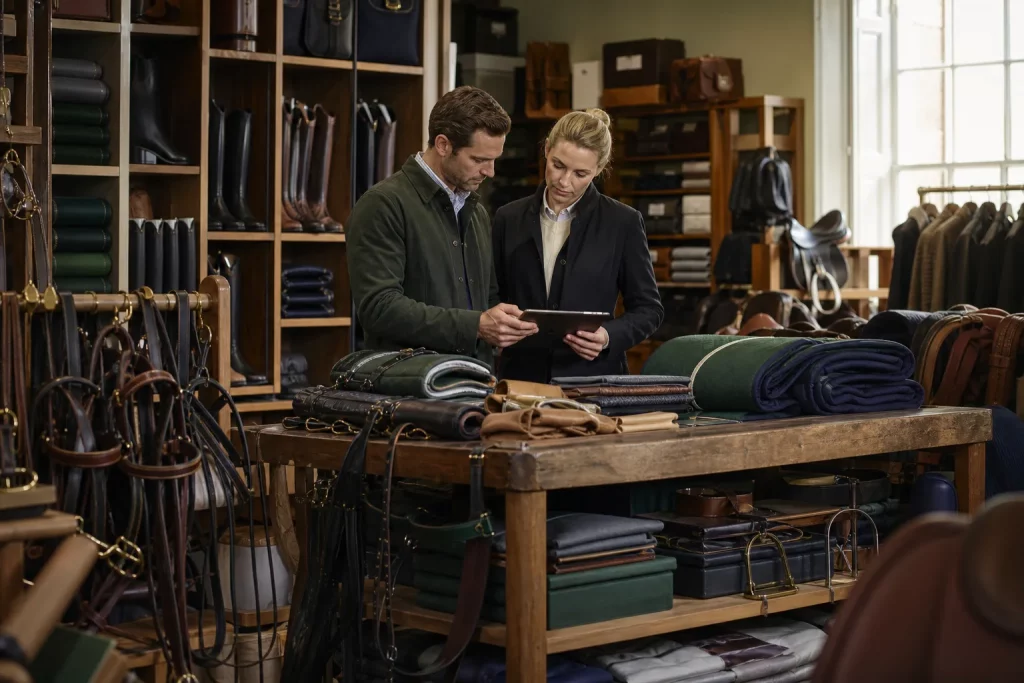
Looking for low MOQ equestrian clothing suppliers in the UK? This guide helps equestrian retailers, emerging brands and sourcing teams compare UK-based and international supply options, assess whether a supplier is suitable for smaller production runs, and ask the right questions before committing to samples, private-label development or a larger order.
“Low MOQ” is not a universal threshold. It may refer to a small first order, a lower quantity per style, a minimum per colour, or a minimum total order across several sizes. The practical objective is to find a supplier whose production model, product range, communication and development process fit the stage of your business.
Last reviewed: September 2026
What buyers should look for in a low MOQ equestrian clothing supplier
Small and growing equestrian brands usually need more than a low number on a quotation. A supplier may accept a modest total order but still require high quantities for each colour, fabric, size or custom trim. Before comparing suppliers, define what “low MOQ” means for your project.
Clarify the MOQ structure
Ask whether the minimum applies to:
- the whole order or each individual product style;
- each colour, fabric or print;
- each size or size run;
- finished garments, fabric metres or component purchases;
- the first order only, with different requirements for repeat production.
A supplier may be more flexible when you select from existing patterns, fabrics or stock colours. A fully bespoke garment, custom fabric development or specialist trim can require a larger commitment because the supplier may need to purchase materials or set up production specifically for your brand.
Assess equestrian product relevance
Riding clothing has requirements that are not always visible in a basic product photograph. Depending on the product, buyers may need to consider stretch and recovery, seam placement, abrasion resistance, moisture management, wind or water resistance, pocket security, grip details, waistband comfort and compatibility with riding movement.
The Equestrian Research Atlas research on technical fabrics in riding clothing provides useful background when assessing fibre choices, stretch, recovery, moisture management, waterproofing, durability and garment performance. It can help a buyer turn a general request such as “premium technical fabric” into specific questions about construction and testing.
Product requirements will differ between breeches, riding tights, base layers, competition shirts, jackets, gilets, hoodies and casual equestrian clothing. A supplier that can produce one category may not be the right fit for another, so ask for relevant examples rather than assuming that general apparel experience covers riding wear.
Check whether the supplier supports your business model
Some suppliers are better suited to wholesale purchasing from an existing collection. Others may support cut-and-sew manufacturing, private label, custom decoration or complete product development. These models should be separated during your research:
- Wholesale or resale: you select existing products and purchase them for retail.
- Private label: an existing or adapted product is supplied under your brand, potentially with branded labels and packaging.
- Custom manufacturing: the garment is developed to your specification, often involving technical packs, patterns, samples and approvals.
- Made-to-order or small-batch production: useful for testing demand, but production capacity, repeatability and lead times need careful confirmation.
For a wider overview of the production model, see EquiGuild’s guide to private label equestrian clothing. If you are comparing factories rather than finished-product suppliers, the equestrian clothing manufacturers page is a relevant next step.
UK suppliers, overseas manufacturers and sourcing routes
A UK search does not necessarily mean every suitable supplier will manufacture in the UK. A UK-based company may act as a wholesaler, distributor, product developer, importer or manufacturer. An overseas factory may also be able to supply a UK brand, but the commercial and operational questions will be different.
When a UK-based supplier may be suitable
A UK-based supplier or production partner may offer practical advantages for communication, sample reviews, domestic delivery and closer collaboration. This can be particularly helpful for a new brand that expects several rounds of fit or design changes. However, buyers should still confirm where garments are actually manufactured, where materials are sourced, and whether the supplier is selling its own products or arranging production elsewhere.
When an international supplier may be suitable
International manufacturers can be relevant when you need a particular product category, manufacturing process, fabric capability or private-label route. The key considerations include shipping, import procedures, payment terms, currency exposure, customs documentation, product compliance responsibilities, inspection arrangements and communication across time zones.
Do not treat an international profile as confirmation that a supplier offers low MOQs or ships to the UK. Use the profile as a starting point, then ask directly about the product and order you want to place. EquiGuild’s pages for low MOQ equestrian clothing manufacturers in Europe and equestrian clothing wholesalers can support a broader comparison of sourcing routes.
Relevant suppliers and brands on EquiGuild
The following live EquiGuild profiles are relevant starting points for buyers investigating equestrian clothing supply. A profile does not, by itself, confirm a supplier’s current MOQ, UK location, production capability, stock position, lead time or compliance documentation. Contact each organisation directly with a clear brief and confirm suitability before relying on any stated or assumed capability.
- JSM Equestrian Supplies
- Khalique Sons International
- JOJI EXPORTS PVT LTD
- REALTEIN EXPORTS PVT LTD
- Starling Exports
- De Star Industry
- Zofiyang
- DH Sportz
Use these profiles as part of a structured shortlist. Record the supplier’s confirmed location, product categories, minimum quantities, sample process, branding options, communication process and current availability. If a supplier appears relevant but does not clearly answer a requirement, treat that point as unresolved rather than filling the gap with an assumption.
Questions to ask about MOQ, samples and product development
A concise, well-structured enquiry usually produces more useful responses than a general request for a catalogue. Include your target product, estimated quantities, intended sales channel, delivery destination and whether you need existing products or custom development.
MOQ and commercial questions
- What is the minimum quantity per style, colour and size?
- Can several styles or colours be combined to meet a minimum?
- Is the MOQ different for samples, first orders and repeat orders?
- Are there separate minimums for custom labels, packaging, embroidery, prints or trims?
- What are the payment terms, quotation validity period and order confirmation process?
- Which costs are included, and which may be charged separately?
Sampling and development questions
- Can the supplier work from a technical pack, reference garment or sketches?
- How many sample rounds are normally required before production approval?
- Can the supplier advise on fit, fabric weight, stretch, construction and grading?
- Who owns the approved pattern, artwork and other development materials?
- Can the supplier reproduce an approved fit consistently in repeat orders?
For technical riding products, ask how performance specifications are defined. “Breathable”, “water-resistant”, “durable” and “four-way stretch” can mean different things unless the underlying fabric, construction or test method is clear. The Equestrian Research Atlas resource on technical textiles used in horse equipment offers relevant context on textile construction, coatings, laminates, testing and product performance.
Lead times, quality control and repeatability
Low MOQ production is only useful if the supplier can deliver the required quality and timing. Ask for a timeline divided into stages rather than accepting one broad estimate. A typical plan may include quotation, material confirmation, sample development, sample approval, bulk production, inspection and dispatch. The actual sequence and duration will vary by supplier and product.
Confirm which events can change the schedule. Fabric availability, custom dyeing, imported trims, label production, public holidays, approval delays and amendments to the specification can all affect delivery. Ask whether the quoted lead time starts when the order is placed, when the deposit is paid, when materials are approved or when the final sample is signed off.
Agree how quality will be checked. Your purchase specification can cover measurements and tolerances, stitching, seam strength, colour consistency, logo placement, garment finish, labelling, packaging and acceptable defect levels. For products intended for riding, include checks relevant to use, such as stretch recovery, fastener function, pocket security and the behaviour of prints or trims after washing.
Request a pre-production sample or approved reference sample where appropriate. For repeat orders, ask how the supplier records the approved fabric, colour, measurements and construction details. This helps reduce the risk that a successful first sample becomes difficult to reproduce later.
UK labelling, claims and product information
UK textile businesses should consider their responsibilities for fibre-content information and product labelling. The official GOV.UK textile labelling guidance explains relevant requirements for textile manufacturers and retailers. Discuss labels early with the supplier, especially if you are combining imported garments with your own branding or selling through multiple channels.
Keep product descriptions accurate and evidence-based. If you describe a garment as waterproof, recycled, sustainable, breathable or environmentally preferable, make sure you understand what the claim refers to and what evidence supports it. The CMA guidance on environmental claims in fashion retail is a useful reference for businesses making green claims to consumers.
Ask suppliers for the information you need to support your product file, but do not assume that a marketing term is a certification or test result. Where performance is commercially important, request the relevant specification, test information or written explanation and retain the documents with your order records.
How EquiGuild helps with supplier discovery
EquiGuild is an equestrian trade network designed to help buyers discover suppliers, manufacturers and brands by capability and sourcing requirement. It can help you move from a broad search to a more focused shortlist, whether you are looking for existing riding wear, private-label options, custom manufacturing or related equestrian products.
Start with the general equestrian clothing suppliers guide to understand the wider supplier landscape. Buyers looking for established labels and retail-ready products can also review equestrian clothing brands in the UK. The separate equestrian clothing, riding wear and brands resource may be useful when your requirement is product discovery rather than factory sourcing.
Once you have identified possible contacts, compare them using the same brief and the same questions. A simple sourcing sheet can record confirmed information under five headings: supplier type, product fit, MOQ structure, development and sampling, and delivery or compliance considerations. This makes it easier to distinguish a promising lead from a supplier that is merely relevant in general terms.
Frequently asked questions
What is a low MOQ for equestrian clothing?
There is no single accepted definition. Low MOQ may mean a small quantity per style, colour or size, or a flexible first order. Always ask how the supplier calculates its minimum and whether different rules apply to custom branding or repeat production.
Are all suppliers listed on this page based in the UK?
No assumption should be made about location from a profile listing alone. Confirm where the organisation is based, where production takes place and whether it currently supplies UK buyers.
Is low MOQ suitable for a new equestrian brand?
It can be useful for testing a product range, reducing initial stock exposure or validating demand. However, a smaller order may have different pricing, fabric choices, development costs or lead times, so compare the complete commercial arrangement rather than MOQ alone.
Should I choose private label or fully custom manufacturing?
Private label can be simpler when an existing product is close to your requirements. Fully custom manufacturing offers more control over fit, features and branding but usually involves more development work, approvals and technical decisions.
What should I send in my first supplier enquiry?
Include the product type, target quantity, size range, colours, branding requirements, delivery country, target launch date and whether you need an existing product or custom development. Ask for MOQ, sample costs, lead time, payment terms and the information needed for a formal quotation.
A focused brief and consistent supplier comparison will give your business a clearer basis for choosing a low MOQ equestrian clothing route, whether that means working with a UK intermediary, an overseas manufacturer, a private-label partner or an existing equestrian brand.
Ready to find the right clothing supplier or brand?
Move from research to live supplier discovery. Compare relevant businesses, explore existing clothing and brand categories, or turn a product idea into a sourcing brief.
Research behind this guide
This guide is supported by EquiGuild editorial research, the Equestrian Research Atlas and current UK guidance. Supplier listings remain separate commercial profiles and should be checked directly before trading.
- Equestrian Research Atlas — Technical Fabrics in Riding Clothing
Research on fibres, stretch, recovery, moisture management, waterproofing, durability and garment performance in riding clothing. - Equestrian Research Atlas — Technical Textiles Used in Horse Equipment
Research on textile construction, coatings, laminates, testing and product performance. - GOV.UK — Textile labelling
Official UK guidance on fibre-content labelling responsibilities for textile manufacturers and retailers. - CMA / GOV.UK — Fashion retail: consumer law when making green claims
Official guidance relevant to environmental and fabric-related claims in fashion retail. - EquiGuild — Equestrian Brands
Existing EquiGuild brand discovery and trade sourcing guide. - EquiGuild — Riding Wear Manufacturers
Existing EquiGuild manufacturer discovery page for riding wear. - EquiGuild — Equestrian Clothing Wholesalers
Existing EquiGuild wholesale clothing sourcing page.
Cite this guide
EquiGuild editorial reference · Last updated 24 September 2026
Canonical source: https://equiguild.co.uk/equestrian-suppliers/rider-clothing-footwear/low-moq-equestrian-clothing-suppliers-uk/