
Guide summary
Equestrian Clothing Importers & Distributors
Research-led sourcing guidance for equestrian buyers, retailers, brands and manufacturers — connected directly to relevant EquiGuild supplier discovery.
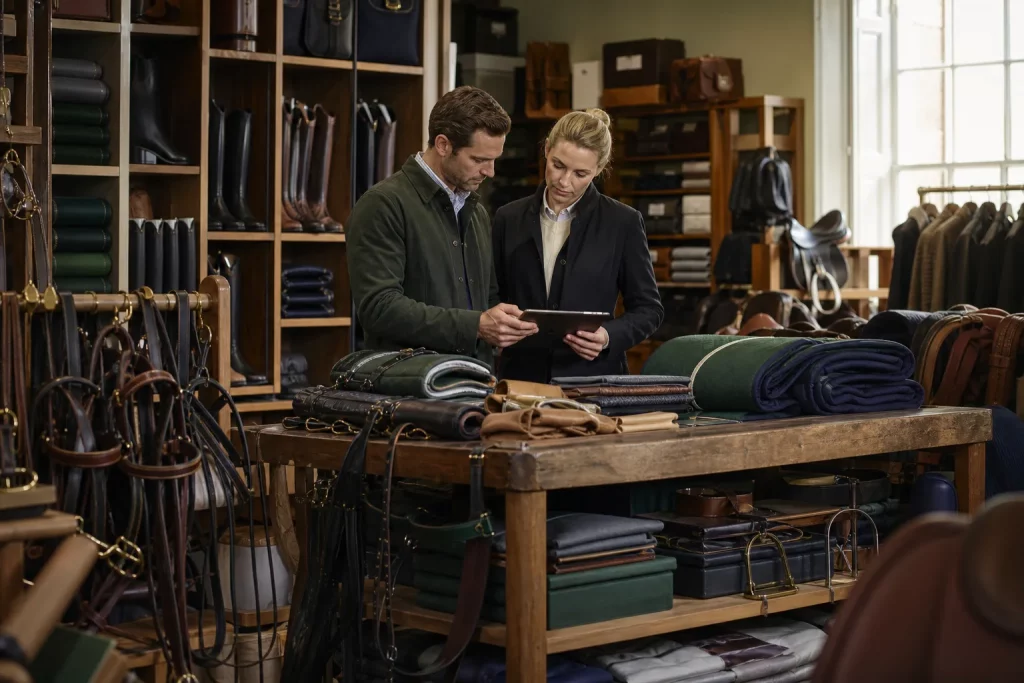
Equestrian Clothing Importers & Distributors
This guide helps equestrian retailers, buyers, brands and sourcing teams understand how to find and assess clothing importers, distributors and related supply partners. It covers the difference between importing and manufacturing, the questions to ask about products and delivery, and how to use EquiGuild to discover relevant businesses for further evaluation.
Equestrian clothing is a specialist category. Riding breeches, competition jackets, base layers, waterproof coats, gilets, shirts and technical outerwear need to meet both commercial and practical requirements. A suitable trade partner may need to support wholesale distribution, private label development, repeat seasonal orders, technical fabric selection, product compliance or a particular route into a target market. The right sourcing route depends on what you are buying, where the goods are made, and which party will manage production, importation and onward distribution.
Last reviewed: September 2026
What does an equestrian clothing importer or distributor do?
An importer brings products from an overseas manufacturer or brand into a target market. Depending on the arrangement, the importer may coordinate freight, customs documentation, product records, warehousing and delivery to retailers or other trade customers. The precise responsibilities should be confirmed contractually, particularly where several companies are involved in the supply chain.
A distributor typically supplies products onward to retailers, dealers, marketplaces or other commercial buyers. Some distributors represent established brands; others may handle a portfolio of products sourced from different manufacturers. A distributor may hold stock locally, take wholesale orders, provide sales support or manage regional availability, but these services vary considerably.
The terms are not interchangeable. A company can be both an importer and a distributor, while another business may only manufacture garments or act as a sourcing intermediary. Before requesting prices, establish which role the prospective partner performs and whether it matches your buying requirement.
Importer, distributor, wholesaler or manufacturer?
- Manufacturer: makes garments or arranges their production. It may offer cut-and-sew production, technical construction, decoration, packaging or private label services.
- Importer: manages or participates in bringing goods into a particular market, with responsibilities that may include customs, documentation and local supply.
- Distributor: sells or supplies products to trade customers, often within a defined territory or product category.
- Wholesaler: sells goods in trade quantities, either from held stock or through an order-led model. A wholesaler may not manufacture the products.
- Brand owner: controls a branded product range and may outsource manufacturing, importing and distribution to separate partners.
Businesses can occupy more than one of these categories. If you need ready-to-sell branded products, start with brand and distribution questions. If you need custom designs, labels or packaging, investigate manufacturers and private label partners as well as importers. EquiGuild’s pages on equestrian clothing suppliers and equestrian clothing manufacturers provide useful adjacent routes for comparing sourcing requirements.
What buyers should look for
The best supplier match is not necessarily the company offering the broadest product list. It is the partner whose operating model, product capability and communication process fit your requirements. Prepare a short buying brief before contacting potential importers or distributors.
Product category and riding use
Specify the products you are looking for, such as full-seat or knee-patch breeches, show shirts, competition jackets, insulated coats, rainwear, base layers, polo shirts or casual equestrian clothing. Explain how the garments will be used. Riding apparel may need freedom of movement, stretch and recovery, abrasion resistance, breathability, weather protection or a neat competition appearance.
Technical fabric selection should be connected to the intended use rather than treated as a marketing label. The Equestrian Research Atlas research on technical fabrics in riding clothing discusses factors including fibres, stretch, recovery, moisture management, waterproofing, durability and garment performance. These considerations can help buyers create more specific product questions.
Construction and performance evidence
Ask how the garment is constructed and what testing or product information is available. Relevant questions may cover seam construction, bonded or taped seams, pocket security, zip performance, lining, reinforcement, colourfastness, wash durability and the behaviour of stretch fabrics after repeated use.
For waterproof or highly technical products, ask whether the stated performance relates to the fabric, the finished garment or a particular test method. Textile construction, coatings, laminates and testing can all affect final performance; the Equestrian Research Atlas overview of technical textiles provides useful background for buyers assessing these claims.
Fit, grading and size availability
Riding clothing often requires a more specific fit than general sportswear. Ask for a size chart and clarify whether measurements refer to the body or the finished garment. Confirm available size ranges, long or short leg options, fit blocks, grading rules and whether samples can be assessed before a larger order.
If you sell across more than one market, check whether sizing conventions, care labels, language requirements and packaging need to change. A distributor supplying an existing range may have fixed size specifications, while a manufacturer or private label partner may be able to develop a different fit.
Brand, packaging and presentation
Retail buyers should establish whether goods are sold under the supplier’s brand, an existing third-party brand, your own label or an unbranded arrangement. Clarify hangtags, care labels, barcodes, packaging, carton marks, product photography and permission to use brand assets. If the commercial requirement is a new collection under your own name, see the separate EquiGuild guide to private label equestrian clothing.
Importing and distribution considerations
Importing clothing involves more than selecting products. The commercial route should be clear from the first quotation through to delivery and after-sales handling.
Who is responsible for the import?
Ask which company will act as importer of record, which party arranges freight, and which party is responsible for customs documentation, duties, taxes and delivery to the agreed destination. These responsibilities can vary according to the contract and shipping terms. Do not assume that a supplier’s ability to ship internationally means it will manage every obligation in your market.
Confirm the proposed delivery terms in writing and ask what documents will accompany the shipment. Depending on the route and product, buyers may need commercial invoices, packing information, transport documents, origin details and product information. Obtain professional customs or legal advice where classification, origin or local regulatory responsibilities are uncertain.
Textile labelling and product information
For sales in the UK, textile labelling responsibilities should be checked carefully. The GOV.UK guidance on textile labelling explains requirements relating to fibre content and the responsibilities of manufacturers and retailers. Ask prospective partners who will prepare, check and apply labels, particularly where garments are imported under your brand or modified for a specific market.
Do not rely on broad descriptions such as “technical”, “eco”, “waterproof” or “sustainable” without asking what they mean and what evidence supports them. The CMA and GOV.UK guidance on environmental claims in fashion retail is relevant when businesses make fabric, sustainability or environmental statements to consumers.
Stock, replenishment and territory
Ask whether the partner supplies from held stock, imports against confirmed orders or combines both models. Stock availability can affect seasonal launches, repeat orders and the risk of discontinued colours or sizes. If a distributor represents a brand in a territory, clarify whether the arrangement is exclusive, non-exclusive or simply a standard wholesale relationship.
Useful operational questions include:
- Where is stock held, and what is the usual dispatch process?
- Are repeat orders placed against available inventory or a future production schedule?
- How are shortages, substitutions and discontinued products communicated?
- Who handles returns, faults and customer complaints?
- Can the supplier support seasonal forecasts or launch dates?
MOQ, product development and lead-time questions
Minimum order quantity, or MOQ, is often one of the first commercial questions, but it should be understood by product and order stage. A supplier may have one requirement for stock purchases, another for a new colour, and a different threshold for a fully customised garment. Never assume that an MOQ stated for one product applies to every category.
Questions for ready-made wholesale ranges
- What is the minimum order per style, colour and size?
- Can sizes be mixed within a style or colour?
- Are samples available, and are sample charges refundable?
- Which products are currently available for immediate or scheduled dispatch?
- How long are products expected to remain in the range?
Questions for custom or private label development
- What information is needed to prepare a quotation or development brief?
- Can the supplier work from technical drawings, reference garments or specifications?
- What is the process for fabric, trim and colour approval?
- How many sample or fit stages are normally required?
- When does production lead time begin: after design approval, deposit, fabric booking or another milestone?
- Can the supplier apply labels, packaging and other brand details?
Lead time should be separated into development, raw-material procurement, production, inspection, freight and import clearance. A quoted production period may not include the time needed for approvals or international transport. Request a timeline with milestones and identify which events could cause delay.
For a broader view of the market, EquiGuild’s resources on equestrian clothing wholesalers and equestrian clothing, riding wear and brands can help separate wholesale buying from manufacturing and brand-discovery requirements.
How to compare potential supply partners
Create a comparison sheet rather than judging a supplier on a single quotation. Record the product categories covered, whether the business manufactures or distributes, the available branding route, sample process, stated order conditions, lead-time assumptions, shipping responsibilities and communication quality.
Request enough information to make a fair comparison, but avoid asking for a full development programme before confirming that the supplier’s basic model fits your business. A sensible first stage may include a company introduction, product range or capability overview, indicative order structure, sample options and the relevant commercial contact.
When reviewing samples, assess fit, construction, fabric hand feel, stretch recovery, stitching, closures, labelling, packaging and wash-care information. If the product makes technical or environmental claims, ask for supporting information and ensure that any consumer-facing wording is accurate and appropriate for the market in which you sell.
Relevant suppliers and brands on EquiGuild
The following live EquiGuild supplier profiles may be relevant starting points for buyers investigating equestrian clothing importing, distribution or connected sourcing routes:
Use each profile as a starting point for due diligence, not as a substitute for a supplier conversation. Confirm the company’s current product categories, manufacturing or distribution role, target markets, order terms, sample process, available documentation and ability to meet your specific sourcing brief. Capabilities, trading arrangements and availability can change, so buyers should validate all commercially important details directly.
EquiGuild also supports wider discovery across the sector. Buyers looking specifically for established labels can explore equestrian brands and equestrian clothing brands. These routes are useful when the objective is to identify products for resale rather than commission a new garment range.
Frequently asked questions
What is the difference between an equestrian clothing importer and a distributor?
An importer brings goods into a market and may manage customs, freight and local supply responsibilities. A distributor supplies products onward to trade customers. One company may perform both roles, but buyers should confirm the exact arrangement.
Should I contact a manufacturer or a distributor?
Contact a distributor or wholesaler when you need existing products or brands for resale. Contact a manufacturer or private label partner when you need custom designs, labels, packaging or a product developed to your specification. Some businesses can support both routes.
What should I ask about MOQ?
Ask whether the MOQ applies per style, colour, size, order or production run. Also ask whether ready-stock purchases, new colours and fully customised garments have different requirements.
How should equestrian clothing lead time be calculated?
Separate design and sample approval, material purchasing, production, quality checks, freight and import clearance. Ask the supplier which stages are included in its quoted lead time and what event starts the production clock.
Who is responsible for textile labels?
Responsibility depends on the supply arrangement and market, but manufacturers and retailers may both have relevant obligations. For UK sales, review the GOV.UK textile labelling guidance and agree in writing who prepares and checks the labels.
Can EquiGuild confirm which supplier is right for my business?
EquiGuild helps buyers discover suppliers, manufacturers and brands by sourcing requirement. You should still assess suitability directly by confirming current capabilities, product specifications, order conditions, documentation, delivery arrangements and commercial terms.
A clear buying brief and structured supplier comparison will make the importing or distribution process easier to manage. Whether you need ready-made riding wear, a regional distribution partner or a private label collection, begin by identifying the required product, market, order model and responsibilities before moving to quotations and samples.
Ready to find the right clothing supplier or brand?
Move from research to live supplier discovery. Compare relevant businesses, explore existing clothing and brand categories, or turn a product idea into a sourcing brief.
Research behind this guide
This guide is supported by EquiGuild editorial research, the Equestrian Research Atlas and current UK guidance. Supplier listings remain separate commercial profiles and should be checked directly before trading.
- Equestrian Research Atlas — Technical Fabrics in Riding Clothing
Research on fibres, stretch, recovery, moisture management, waterproofing, durability and garment performance in riding clothing. - Equestrian Research Atlas — Technical Textiles Used in Horse Equipment
Research on textile construction, coatings, laminates, testing and product performance. - GOV.UK — Textile labelling
Official UK guidance on fibre-content labelling responsibilities for textile manufacturers and retailers. - CMA / GOV.UK — Fashion retail: consumer law when making green claims
Official guidance relevant to environmental and fabric-related claims in fashion retail. - EquiGuild — Equestrian Brands
Existing EquiGuild brand discovery and trade sourcing guide. - EquiGuild — Riding Wear Manufacturers
Existing EquiGuild manufacturer discovery page for riding wear. - EquiGuild — Equestrian Clothing Wholesalers
Existing EquiGuild wholesale clothing sourcing page.
Cite this guide
EquiGuild editorial reference · Last updated 11 November 2026
Canonical source: https://equiguild.co.uk/equestrian-suppliers/rider-clothing-footwear/equestrian-clothing-importers-distributors/