
Guide summary
Riding Breeches Manufacturers
Research-led sourcing guidance for equestrian buyers, retailers, brands and manufacturers — connected directly to relevant EquiGuild supplier discovery.
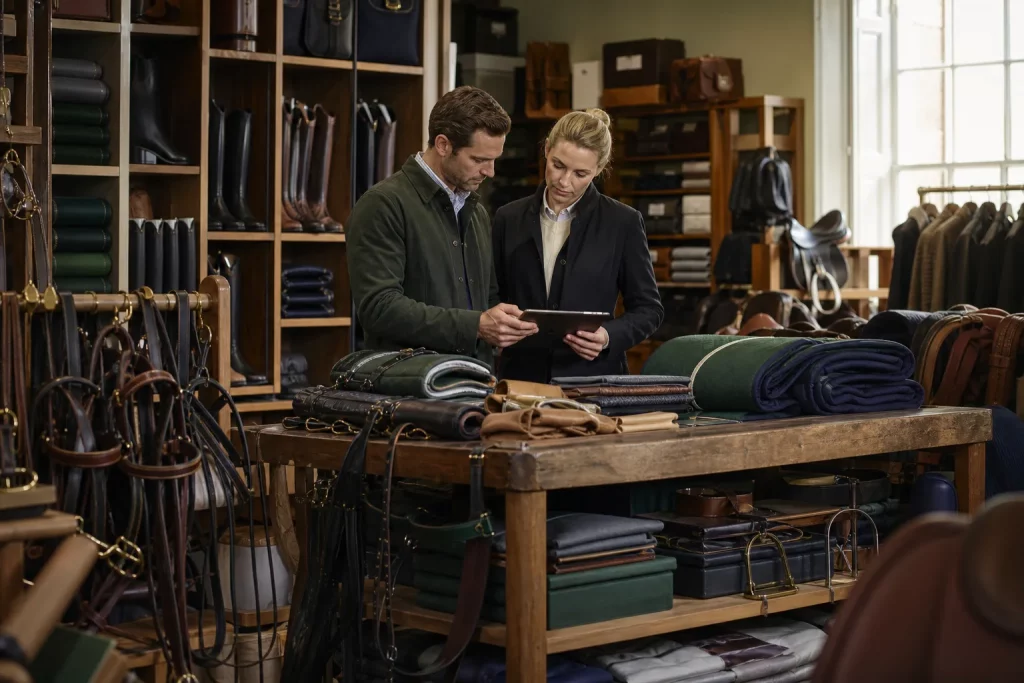
Riding Breeches Manufacturers
Use this guide to identify and compare riding breeches manufacturers, suppliers and equestrian clothing partners for retail ranges, private-label collections and branded products. It explains the product, fabric, fit, development and commercial questions buyers should ask before requesting samples or placing an order.
Riding breeches sit between technical sportswear and everyday equestrian clothing. They need to support movement in the saddle while meeting practical expectations around comfort, durability, fit, appearance and care. The right manufacturing partner will depend on your product brief: a straightforward stock range, a customised design, a private-label programme or a fully developed technical garment.
Last reviewed: September 2026
What are riding breeches?
Riding breeches are close-fitting trousers designed for equestrian use. Compared with conventional fashion trousers, they are typically developed with riding posture, saddle contact and repeated movement in mind. Product details may include a shaped waistband, articulated leg construction, stretch fabric, reinforced or grippy seat and practical pockets.
There is no single specification for all riding breeches. A competition breech may prioritise a clean silhouette, subtle branding and a particular seat treatment, while a training or leisure style may place greater emphasis on storage, fabric weight, easy care and everyday comfort. Winter breeches may require a heavier construction or brushed interior, whereas summer products may focus on breathability and moisture management.
Buyers should define the intended use before comparing manufacturers. Useful starting points include:
- Discipline and riding environment, such as dressage, jumping, eventing, hacking or general yard use.
- Season, climate and expected temperature range.
- Customer profile, size range and preferred fit.
- Full-seat, knee-patch or non-grip construction.
- Required pocket layout, waistband height and ankle finish.
- Target retail positioning and relationship to the rest of the collection.
What buyers should look for in a riding breeches manufacturer
Relevant garment experience
Ask whether the prospective partner has experience producing close-fitting stretch trousers, technical sportswear or equestrian garments. Experience should be assessed through relevant samples, construction discussions and quality procedures rather than assumed from a general clothing description.
A manufacturer may be highly capable in one category but less familiar with the demands of riding apparel. Ask how they approach areas such as seat construction, seam placement, stretch recovery, waistband stability, grippy panels, pocket security and repeated laundering. These conversations can reveal whether the supplier understands the product beyond its appearance.
Fabric performance and construction
Fabric selection affects comfort, shape retention, opacity, drying time, durability and the finished garment’s hand feel. Depending on the brief, buyers may compare woven stretch fabrics, knitted constructions, brushed interiors, lightweight summer materials and more substantial cold-weather options.
The Equestrian Research Atlas research on technical fabrics in riding clothing discusses fibres, stretch, recovery, moisture management, waterproofing, durability and wider garment-performance considerations. It is useful background when turning broad requests such as “comfortable,” “breathable” or “technical” into specifications that can be evaluated.
Do not rely on fabric names alone. Request the composition, fabric weight where relevant, stretch direction, recovery expectations, colourfastness information and care instructions. If a supplier proposes a coating, laminate or special finish, ask what performance benefit it is intended to provide and how that benefit is tested.
Fit, grading and size inclusivity
Riding breeches need to fit across the waist, hip, thigh, knee and lower leg while allowing movement in a seated position. A pattern that looks acceptable on a standing fit model may behave differently when the wearer bends the knee or sits in the saddle.
Request a detailed measurement chart and clarify whether sizes are graded from one base size or developed using multiple fit references. Discuss regular, long, short, curvy or plus-size options if these are relevant to your customer base. Sample fittings should include movement checks, sitting tests and examination of waistband comfort, knee placement and fabric coverage.
Seat and grip options
Full-seat and knee-patch breeches can use different grip materials and application methods. Buyers should ask about the material, shape, flexibility, attachment process, wash performance and replacement or repair considerations. Grip should support stability without making the garment uncomfortable or restricting movement.
Ask to see the proposed seat treatment on the actual fabric rather than approving it only from a drawing. Check whether the grip affects the garment’s stretch, whether it creates a noticeable edge, and how it looks after laundering. The intended saddle use and customer expectations should guide the decision.
Finishing, trims and branding
Important details include zip and press-stud quality, bartacks, pocket construction, belt loops, embroidery, printed labels, heat transfers and packaging. Branding requirements should be agreed before sampling because logo placement, label construction and decoration methods can affect pattern pieces, production steps and cost.
For a collection with multiple colours or seasonal drops, request colour standards and approval procedures. Clarify how shade variation is managed between fabric lots and repeat orders. A small trim or colour difference can be commercially significant when products are sold as a coordinated range.
Manufacturer, supplier, brand and wholesaler: what is the difference?
These terms can describe different sourcing routes, although businesses sometimes perform more than one role.
- Manufacturer: produces garments, either from its own designs, a buyer’s technical pack or a collaborative development brief.
- Supplier: may provide finished garments, production services, fabrics, trims or a combination of these. The exact role should be confirmed directly.
- Brand: sells products under its own identity. A brand may manufacture internally, use an external factory or offer wholesale supply.
- Wholesaler: generally distributes finished products to retailers and may not offer custom product development.
- Private-label partner: produces garments for sale under the buyer’s name, with the level of customisation agreed during the project.
If you need an existing product quickly, a wholesale or established brand route may be more suitable than a factory development programme. If you need exclusive designs, your own labels or a specific technical specification, speak to manufacturers and private-label partners. EquiGuild’s guide to private-label equestrian clothing provides a useful route into that type of sourcing requirement.
For a broader supplier search, compare the options in equestrian clothing manufacturers, or review equestrian clothing suppliers if you are still deciding between production and finished-product sourcing.
Sourcing considerations for riding breeches
Stock products versus custom development
Stock products can reduce development time and may suit retailers that need established fits or seasonal replenishment. Custom development can offer greater control over fabric, pattern, grip, pockets, colours and branding, but it usually requires more decisions, samples and approvals.
Ask whether the quoted product is an existing style, a modified existing style or a new pattern. Establish which elements can be changed without creating a completely new development programme. A supplier may be able to alter labels and colours easily but require additional work for a new seat construction, pocket arrangement or fit block.
MOQ and order planning
Minimum order quantities should be discussed by style, colour and size breakdown, not just as one total number. A low total MOQ may still require a significant commitment in each colour or size. Ask whether the minimum applies to the first order only or to repeat production as well.
Also clarify whether sample quantities count toward the production order, how size ratios are handled, and whether the supplier can support a phased launch. If you are building a new range, prepare a realistic forecast that separates initial launch quantities from likely replenishment demand.
Product development and sampling
A clear technical pack can make communication more efficient. It may include flat sketches, measurement points, construction notes, fabric requirements, colour references, artwork, label details and packaging instructions. However, a technical pack should be treated as a starting point for discussion if the manufacturer identifies construction or performance issues.
Ask how many sample stages are normally expected and who pays for pattern work, prototypes, revisions and courier charges. A practical sample process may include an initial development sample, a fit sample, a revised pre-production sample and a final approval sample. Keep written records of approved measurements, materials and details so the production version can be checked against them.
Lead times and production scheduling
Lead time can involve fabric booking, trim sourcing, pattern development, sampling, approvals, production, inspection and shipping. Ask for each stage separately rather than accepting one broad delivery estimate. Confirm when the clock starts: after the purchase order, deposit, sample approval, fabric approval or another milestone.
Before committing to a launch date, ask how delays are communicated and how changes to quantities or colours affect the schedule. For seasonal equestrian products, build in time for testing, photography, sales samples, packaging and retailer delivery rather than planning only around factory production.
Quality control and documentation
Agree how measurements, seam quality, stretch, colour, grip placement, trims and labelling will be checked. Request a clear inspection process and understand how non-conforming goods are handled. If your product uses performance language, identify the evidence you expect before approving product copy.
Textile composition and care information also need attention. The UK government’s textile labelling guidance explains responsibilities relevant to fibre-content labelling for textile manufacturers and retailers. Buyers should confirm who supplies the final label wording and who checks that it is accurate for the market where the breeches will be sold.
Be careful with environmental descriptions such as “sustainable,” “eco-friendly” or “recycled.” The CMA guidance on environmental claims in fashion retail is relevant when developing product pages, packaging and promotional statements. Claims should be specific, supportable and consistent with the product’s full life cycle rather than based on a vague fabric description.
Relevant suppliers and brands on EquiGuild
The following live supplier profile is available for review on EquiGuild:
The profile should be assessed against your own riding-breeches brief. Contact the business directly to confirm its current product scope, manufacturing role, development process, order requirements, lead times, documentation and suitability for your market. A directory profile is a starting point for discovery, not a substitute for commercial and technical due diligence.
Buyers comparing finished equestrian products may also find the broader equestrian clothing, riding wear and brands guide useful. For adjacent product categories, EquiGuild also covers riding tights manufacturers, riding jackets manufacturers and riding shirts manufacturers.
Questions to ask before choosing a partner
A focused first enquiry can help you compare suppliers consistently. Include your target market, product type, intended use, size range, approximate order quantity, preferred fabric direction, branding needs and required delivery window. Then ask:
- Do you produce riding breeches or comparable stretch equestrian garments?
- Can you work from a technical pack, an existing sample or a collaborative brief?
- What fabric, grip, trim and colour options are currently available?
- What are the MOQs by style, colour and size?
- What are the sample, approval and production lead times?
- Which tests, specifications and labelling documents can you provide?
- How are quality issues, revisions and repeat orders managed?
EquiGuild is designed to help trade buyers move from a broad category search to a more relevant supplier conversation. By organising discovery around products and sourcing requirements, it can help retailers, brands, distributors and manufacturers identify possible contacts for further evaluation. Buyers should then compare samples, documentation, communication, commercial terms and production evidence directly.
FAQs
What is the difference between riding breeches and riding tights?
Riding breeches are generally more structured trousers and may include a waistband, fastening, pockets and a tailored construction. Riding tights are usually more legging-like and may prioritise lightweight stretch and pull-on comfort. The distinction varies by product, so review the actual construction and intended use.
Can a manufacturer make private-label riding breeches?
Some manufacturers may offer private-label production, but this must be confirmed directly. Ask whether they can apply your labels and branding, modify an existing style or develop a new product to your specification.
What should I include in a first enquiry?
Include the intended riding use, target customer, product type, size range, estimated quantities, preferred materials, seat or grip requirements, branding details, destination market and launch date. This gives the supplier enough context to explain whether its process is suitable.
How early should I contact riding breeches manufacturers?
Contact manufacturers before the selling season if you need new patterns, custom fabrics, multiple sample rounds or branded packaging. Request a stage-by-stage timeline covering development, approvals, production and delivery before announcing a launch date.
How can I assess technical fabric claims?
Ask what the claim means, how it is measured and whether supporting test information is available. The Equestrian Research Atlas research on technical textiles provides useful context on textile construction, coatings, laminates, testing and product performance.
Should I choose a manufacturer or a wholesaler?
Choose based on the requirement. A wholesaler or established brand may suit an immediate finished-product range, while a manufacturer or private-label partner may be more appropriate when you need custom fit, materials, branding or product development.
Ready to find the right clothing supplier or brand?
Move from research to live supplier discovery. Compare relevant businesses, explore existing clothing and brand categories, or turn a product idea into a sourcing brief.
Research behind this guide
This guide is supported by EquiGuild editorial research, the Equestrian Research Atlas and current UK guidance. Supplier listings remain separate commercial profiles and should be checked directly before trading.
- Equestrian Research Atlas — Technical Fabrics in Riding Clothing
Research on fibres, stretch, recovery, moisture management, waterproofing, durability and garment performance in riding clothing. - Equestrian Research Atlas — Technical Textiles Used in Horse Equipment
Research on textile construction, coatings, laminates, testing and product performance. - GOV.UK — Textile labelling
Official UK guidance on fibre-content labelling responsibilities for textile manufacturers and retailers. - CMA / GOV.UK — Fashion retail: consumer law when making green claims
Official guidance relevant to environmental and fabric-related claims in fashion retail. - EquiGuild — Equestrian Brands
Existing EquiGuild brand discovery and trade sourcing guide. - EquiGuild — Riding Wear Manufacturers
Existing EquiGuild manufacturer discovery page for riding wear. - EquiGuild — Equestrian Clothing Wholesalers
Existing EquiGuild wholesale clothing sourcing page.
Cite this guide
EquiGuild editorial reference · Last updated 11 November 2026
Canonical source: https://equiguild.co.uk/equestrian-suppliers/rider-clothing-footwear/riding-breeches-manufacturers/